Spotlight on a cyclist – Alan Irving

  1. What is your name, where are you from and how long have you been in Aberdeen (if not local)?

I’m Alan, I had a somewhat nomadic upbringing but I’ve been in Aberdeen off and on for (yikes) twenty-five years. I currently work in Stavanger (Norway) and travel home every weekend or two.

  1. How did you get into cycling?

As a child of the 1980s, I had (and outgrew) a Raleigh Chopper, Mag Burner (BMX), Peugeot racer, then a steel mountain bike which I still own. I fell out of the habit at university in Edinburgh and London, but fell back in thanks to keen work colleagues – first mountain biking and orienteering in Scotland, then road cycling when we lived in Pau, southwest France, for five years.

  1. What kind of cycling do you do?

A bit of everything, although I undoubtedly spend as much time fixing bikes as riding them. My favourite sort of ride is mixed terrain: quiet roads, lanes, woods, nature…of which we’re fortunate to have plenty around Aberdeen. But I equally enjoy using bikes for transport whenever I can, instead of defaulting to the car.

  1. What type of cycle do you use?

See above. Most often I ride a cyclocross bike that is reasonably efficient and practical (rack and mudguards for commuting) but capable of detouring offroad when required. I still have road and mountain bikes but ride those quite rarely. We have a family folding bike (Brompton), which is handy for mixed mode trips (bus, train or car boot).  And in Stavanger I often use the public rental e-bikes – which are free for the first 15 minutes, or one hour if your employer is a member of the local sustainable travel scheme.

  1. Where do you cycle usually/any favourite routes? How often?

My usual route in Aberdeen was from Redmoss to Westhill via the A944 path, but I wouldn’t call it a favourite…  Otherwise, the Gramps (Kincorth and Tullos), the Coast Path from Cove to Greyhope Bay (before it was buried by the harbour), Tollohill Wood, the Causeymounth, and the aforementioned quiet roads and lanes linking them up.  In Norway, I can bike to work on a mix of quiet roads and shared paths, which are well maintained (swept in autumn and cleared in winter) and quiet enough to minimise conflict between users. The public transport is well integrated too, and I’ve taken my bike on buses, trains and boats, which opens up some fantastic terrain for exploring on two wheels.

  1. What would you like to see to improve your cycling experience?

Where to start? It won’t be news to anybody, but better, continuous cycle routes would be number one. Norway is undoubtedly rich, but they spend it wisely. Tunnels, underpasses and bridges are common, and it’s quite rare to cross a road “at grade” with other traffic. There is a (nearly finished) 16km (10-mile) Sykkelstamvegen (cycle highway) between Stavanger and Sandnes, with electronic counters recording the thousands of daily users (including the occasional roller skier or speed skater). There are also some simpler (cheaper) things we could adopt – clear signs, user-activated crossings that change quickly (or even automatically when a cyclist is approaching), and handy metal rails to avoid dismounting while you wait.

  1. Any top tips for someone considering cycling in the area?

Find buddies, for help, advice and encouragement. And go for it! The Norwegians talk about overcoming the dørstokkmila – the doorstep mile. If you can just get outside and start moving, you’ll usually forget whatever was holding you back.

Some photos from cycling in Norway.
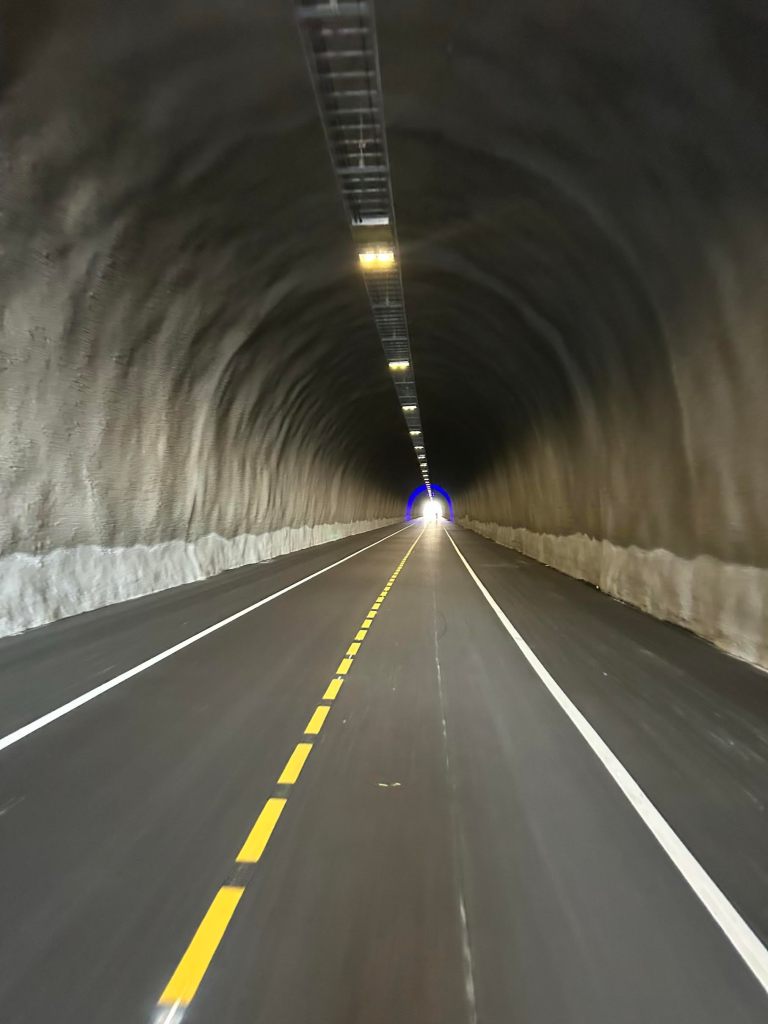
Sørmarkatunnelen – 380m of smooth tarmac and big enough for (I guess) emergency vehicles in case the adjacent road tunnels are blocked. 
Bikes go free on two ferries which are included in the city transport ticket.  Further afield they’re cheap (or even free), and you pay a half (=child) fare on trains and buses.
Bikes are (wisely) banned from the subsea road tunnels, but allowed in most others, including the first couple of kilometres of the spectacular Lysevegen mountain road.
Taking a bus/boat opens up some fantastic countryside when the weather is fine (as in summer 2025).  
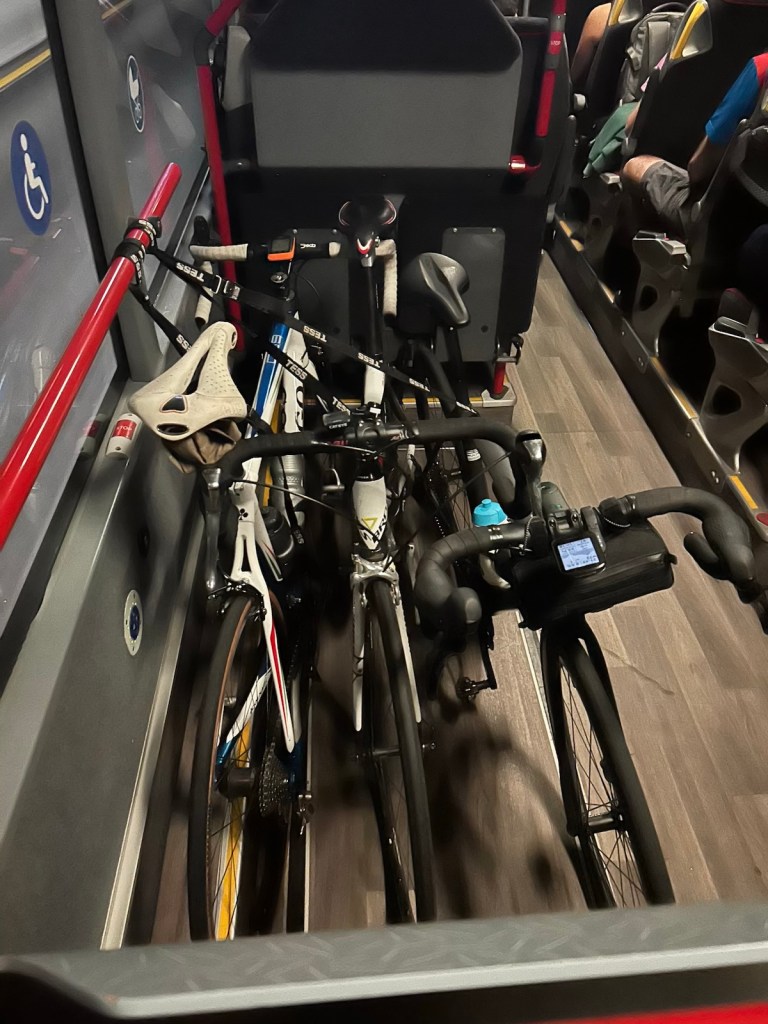
Officially, buses may be limited to two bikes, but it’s at the discretion of the driver, and there’s usually ample space.
The public rental e-bikes are comfortable, pretty abundant and usually well maintained. 
Electric road sweeper clearing autumn leaves from a shared path on my daily commuting route.

And the winners are …

On Tuesday our 2024 Best in Cycling Awards came to a conclusion with winners announced and certificates presented.  The winners are:

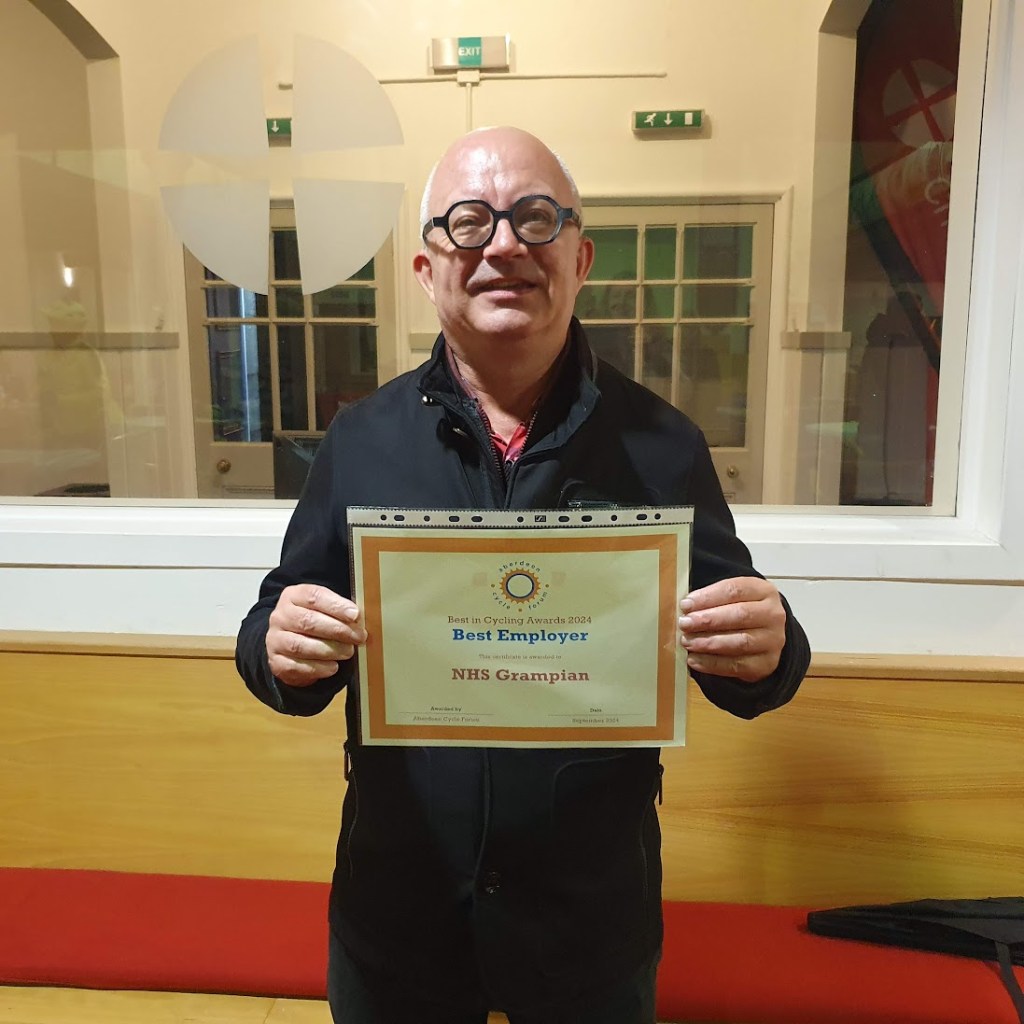
Best Employer – NHS Grampian

NHS Grampian have made strides in recent years in improving facilities for active travel and encouraging active travel within the organisation.  Judges were impressed by the range of activities including a pool of e-bikes for use by staff for work-related travel. High-quality cycle parking is provided across several sites.  There have also been cycling lessons for inexperienced riders and Dr Bike maintenance sessions. A worthy winner!

NHS Grampian receiving their award

Best new Cycle infrastructure –  Ellon Wheel Park

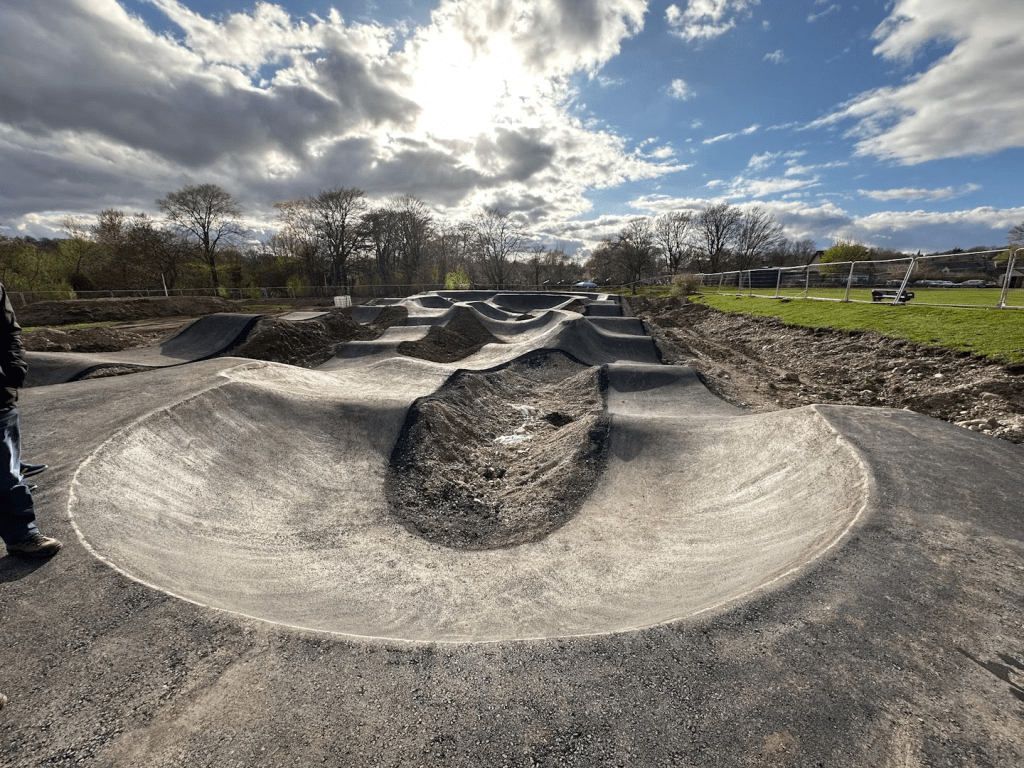
This Award goes to Ellon Wheel Park – a great new facility delivered by a group of dedicated volunteers who managed to get through all the planning and funding obstacles that are part of delivering a significant project like this. There is a pump track, alongside a closed loop level track which can be used for training and a full range of activities. The next stage of the project will also add a dedicated skate park. Check it out next time you are in Ellon!  Ellon Wheel Park | Sports | Gordon Park, Ellon, UK

A photo of Ellon Wheel Park showing the curvy undulating bike path.

Best public cycle parking – Balgownie, Lord Hay’s and St Ninians Court 

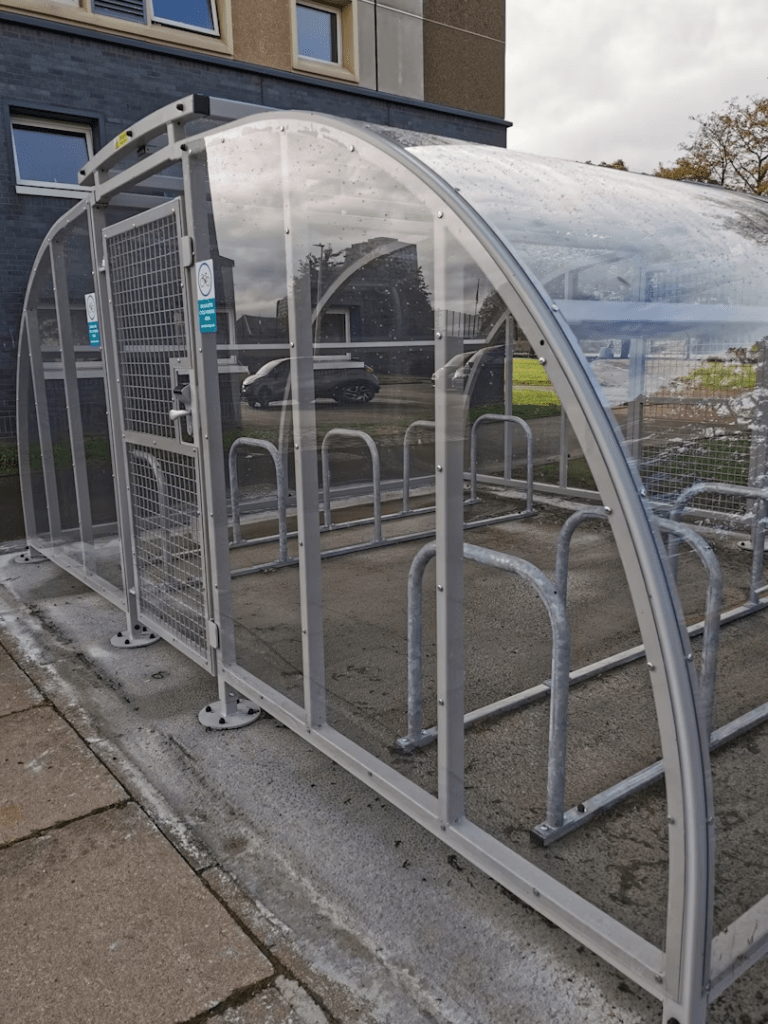
Having somewhere safe and secure to park your bike can be a real problem for those who live in flats when hoiking a bike up the stairs everyday isn’t an option.  We’re delighted that Aberdeen City Council have gone ahead and installed secure bike shelters at Balgownie, Lord Hay’s and St Ninians Court.  We understand more are in the pipeline for other ACC locations.

Best School – Harlaw Academy

With initial support from Sustrans I-bike project, some dedicated staff at Harlaw have continued to deliver and develop cycling in the school, including a girl’s group as part of the #andshecycles campaign.  The have become a Cycle Accredited School and recently secured funding for new cycle parking. Well done Harlaw!

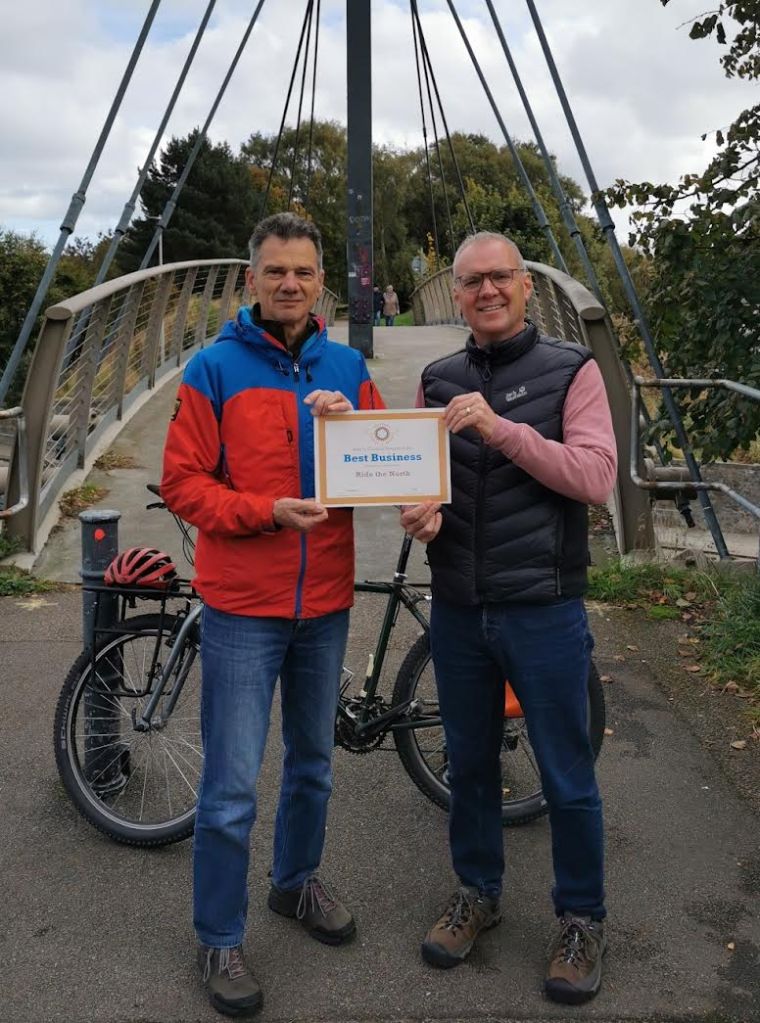
Best Business – Ride the North

Many of you will be familiar with Ride the North and don’t need us to tell you what a great cycle event it has become and an established date in the cyclist’s calendar.  The emphasis is always on fun, the communities, and on top of that, since 2011 it has raised in excess of £2M for a range of charities. We’re already looking forward to RtN 2025!

Ride the North receiving their award for best business.

Cycle Heroes (Best community / volunteer project) – Cycling Without Age (Scotland) Aberdeen City

Before we say a bit about the winner, we were also impressed by the other worthy nominations so congratulations also to runners-up: Martin Sharman (CM Aberdeen), Clare Tayler (Harlaw Academy) and Middlefield Community Project Bike Hub.  There are so many positive things happening in the world of cycling!

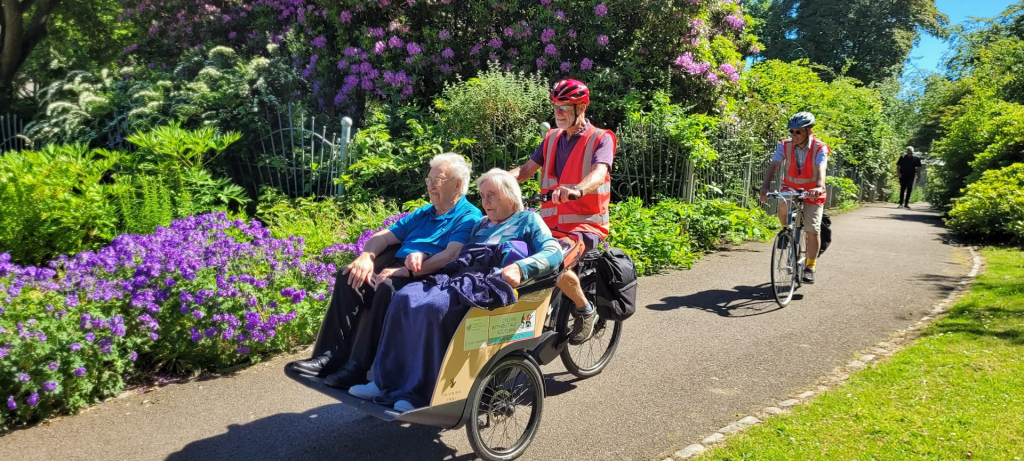
Cycling without Age (Scotland) has only been operating in Aberdeen for two years but they are making a huge impact and have recently been able to expand their fleet of ‘Trishaws’ such that they are now able to work with several care homes across the city.  They are always on the look-out for new volunteer pilots, so get in touch if you can spare some time.    Welcome to Cycling Without Age Scotland

Cycling without Age

The Cycle Raspberry –  SUVs

Nominations for the Raspberry included some of our poor quality – or just missing – infrastructure, some bad examples of cycle parking provision, old and new, and one very dangerous roundabout.  But the winner (voted for by the public) is SUVs.   No one can have failed to notice that cars are getting bigger and the proportion of SUVs in the city seems to be increasing exponentially.  Cars get bigger and bigger but our streets don’t, so the logical result is that there is less room for everyone else, including cyclists.