Spotlight on a cyclist – Alan Irving

  1. What is your name, where are you from and how long have you been in Aberdeen (if not local)?

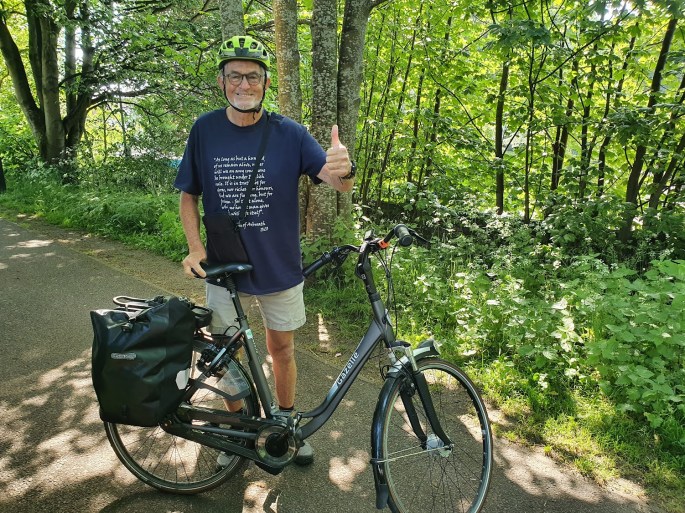
I’m Alan, I had a somewhat nomadic upbringing but I’ve been in Aberdeen off and on for (yikes) twenty-five years. I currently work in Stavanger (Norway) and travel home every weekend or two.

  1. How did you get into cycling?

As a child of the 1980s, I had (and outgrew) a Raleigh Chopper, Mag Burner (BMX), Peugeot racer, then a steel mountain bike which I still own. I fell out of the habit at university in Edinburgh and London, but fell back in thanks to keen work colleagues – first mountain biking and orienteering in Scotland, then road cycling when we lived in Pau, southwest France, for five years.

  1. What kind of cycling do you do?

A bit of everything, although I undoubtedly spend as much time fixing bikes as riding them. My favourite sort of ride is mixed terrain: quiet roads, lanes, woods, nature…of which we’re fortunate to have plenty around Aberdeen. But I equally enjoy using bikes for transport whenever I can, instead of defaulting to the car.

  1. What type of cycle do you use?

See above. Most often I ride a cyclocross bike that is reasonably efficient and practical (rack and mudguards for commuting) but capable of detouring offroad when required. I still have road and mountain bikes but ride those quite rarely. We have a family folding bike (Brompton), which is handy for mixed mode trips (bus, train or car boot).  And in Stavanger I often use the public rental e-bikes – which are free for the first 15 minutes, or one hour if your employer is a member of the local sustainable travel scheme.

  1. Where do you cycle usually/any favourite routes? How often?

My usual route in Aberdeen was from Redmoss to Westhill via the A944 path, but I wouldn’t call it a favourite…  Otherwise, the Gramps (Kincorth and Tullos), the Coast Path from Cove to Greyhope Bay (before it was buried by the harbour), Tollohill Wood, the Causeymounth, and the aforementioned quiet roads and lanes linking them up.  In Norway, I can bike to work on a mix of quiet roads and shared paths, which are well maintained (swept in autumn and cleared in winter) and quiet enough to minimise conflict between users. The public transport is well integrated too, and I’ve taken my bike on buses, trains and boats, which opens up some fantastic terrain for exploring on two wheels.

  1. What would you like to see to improve your cycling experience?

Where to start? It won’t be news to anybody, but better, continuous cycle routes would be number one. Norway is undoubtedly rich, but they spend it wisely. Tunnels, underpasses and bridges are common, and it’s quite rare to cross a road “at grade” with other traffic. There is a (nearly finished) 16km (10-mile) Sykkelstamvegen (cycle highway) between Stavanger and Sandnes, with electronic counters recording the thousands of daily users (including the occasional roller skier or speed skater). There are also some simpler (cheaper) things we could adopt – clear signs, user-activated crossings that change quickly (or even automatically when a cyclist is approaching), and handy metal rails to avoid dismounting while you wait.

  1. Any top tips for someone considering cycling in the area?

Find buddies, for help, advice and encouragement. And go for it! The Norwegians talk about overcoming the dørstokkmila – the doorstep mile. If you can just get outside and start moving, you’ll usually forget whatever was holding you back.

Some photos from cycling in Norway.
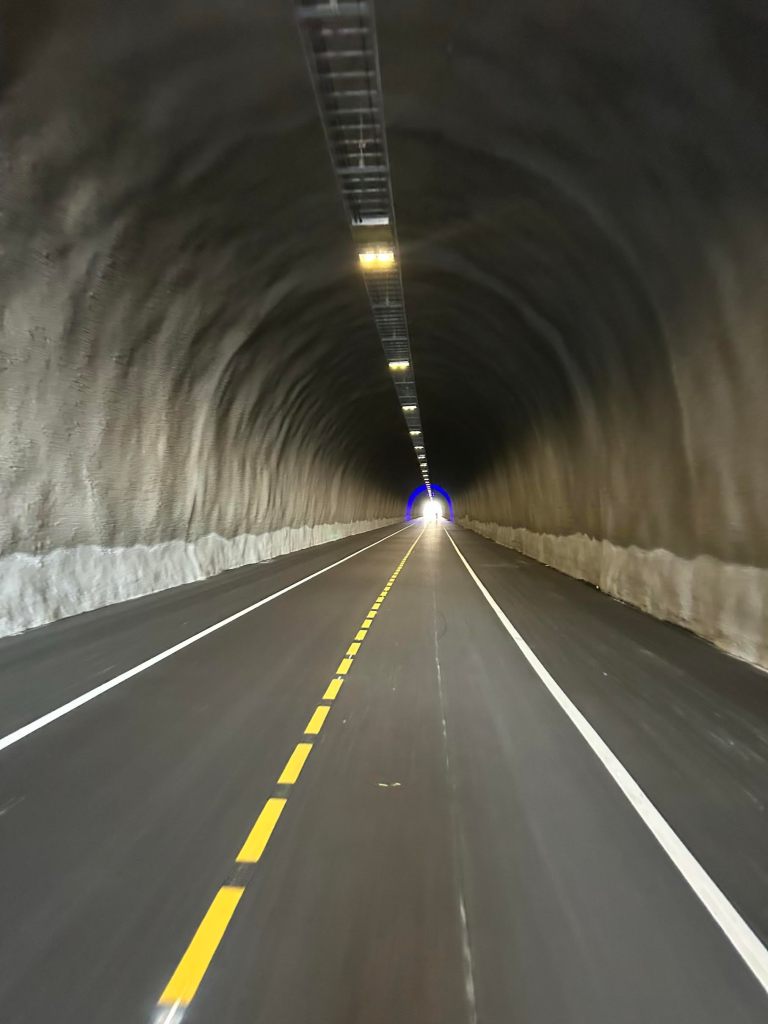
Sørmarkatunnelen – 380m of smooth tarmac and big enough for (I guess) emergency vehicles in case the adjacent road tunnels are blocked. 
Bikes go free on two ferries which are included in the city transport ticket.  Further afield they’re cheap (or even free), and you pay a half (=child) fare on trains and buses.
Bikes are (wisely) banned from the subsea road tunnels, but allowed in most others, including the first couple of kilometres of the spectacular Lysevegen mountain road.
Taking a bus/boat opens up some fantastic countryside when the weather is fine (as in summer 2025).  
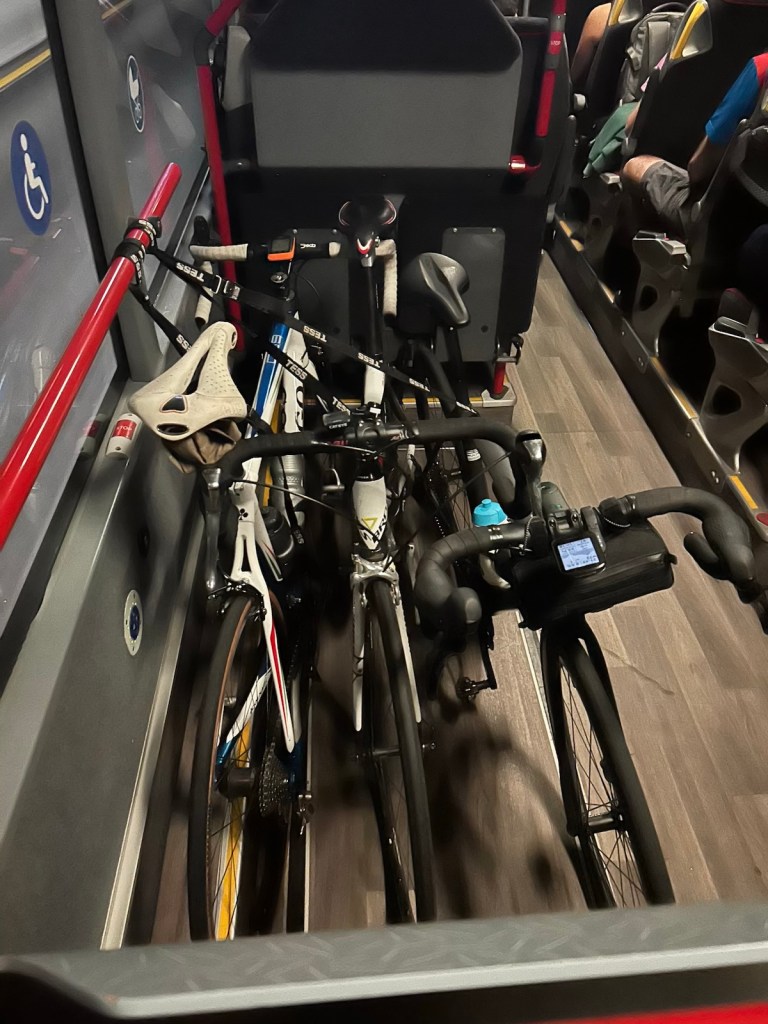
Officially, buses may be limited to two bikes, but it’s at the discretion of the driver, and there’s usually ample space.
The public rental e-bikes are comfortable, pretty abundant and usually well maintained. 
Electric road sweeper clearing autumn leaves from a shared path on my daily commuting route.

And the winners are …

On Tuesday our 2024 Best in Cycling Awards came to a conclusion with winners announced and certificates presented.  The winners are:

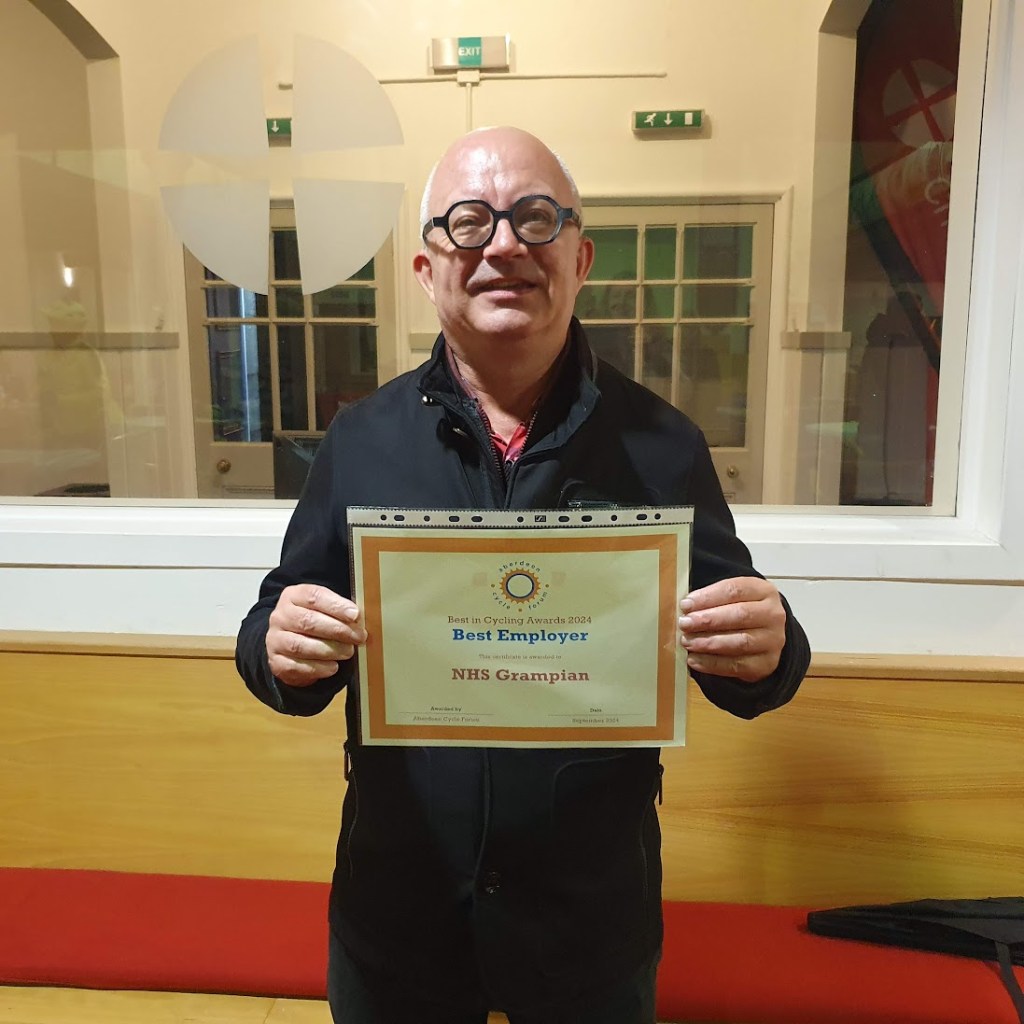
Best Employer – NHS Grampian

NHS Grampian have made strides in recent years in improving facilities for active travel and encouraging active travel within the organisation.  Judges were impressed by the range of activities including a pool of e-bikes for use by staff for work-related travel. High-quality cycle parking is provided across several sites.  There have also been cycling lessons for inexperienced riders and Dr Bike maintenance sessions. A worthy winner!

NHS Grampian receiving their award

Best new Cycle infrastructure –  Ellon Wheel Park

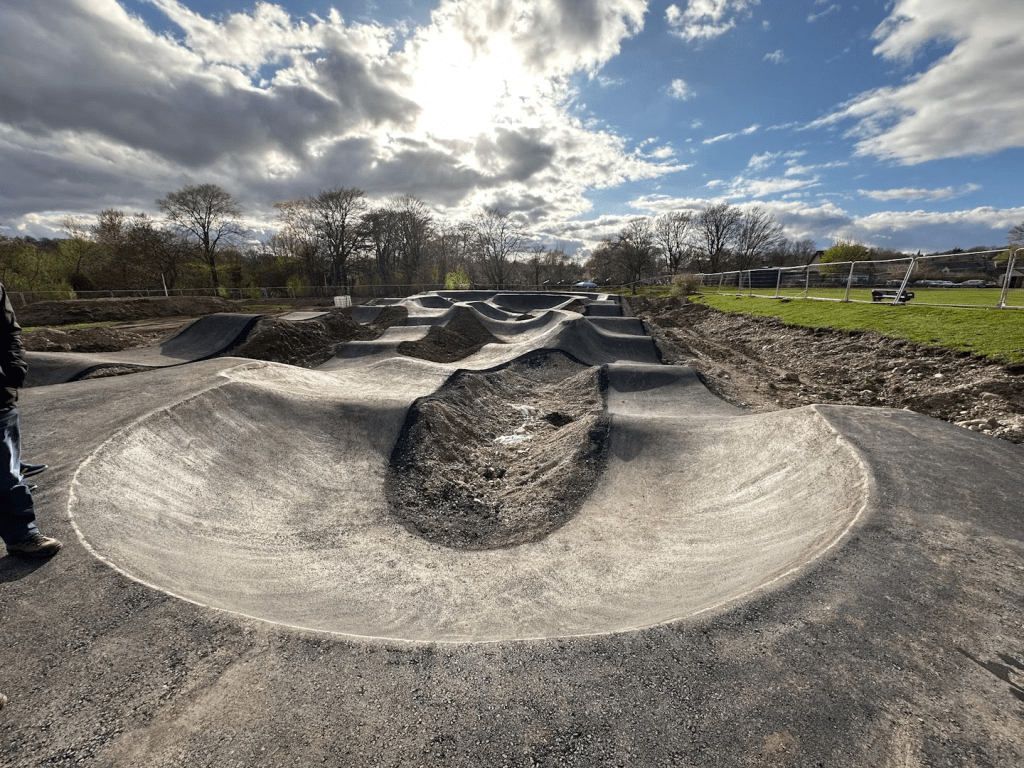
This Award goes to Ellon Wheel Park – a great new facility delivered by a group of dedicated volunteers who managed to get through all the planning and funding obstacles that are part of delivering a significant project like this. There is a pump track, alongside a closed loop level track which can be used for training and a full range of activities. The next stage of the project will also add a dedicated skate park. Check it out next time you are in Ellon!  Ellon Wheel Park | Sports | Gordon Park, Ellon, UK

A photo of Ellon Wheel Park showing the curvy undulating bike path.

Best public cycle parking – Balgownie, Lord Hay’s and St Ninians Court 

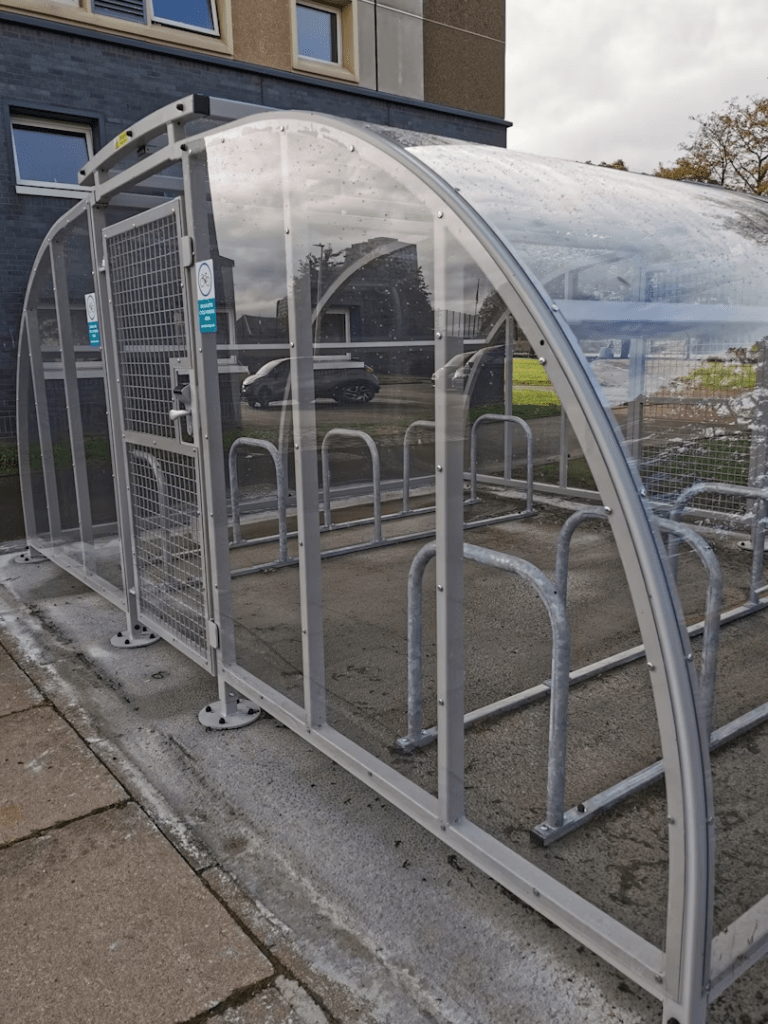
Having somewhere safe and secure to park your bike can be a real problem for those who live in flats when hoiking a bike up the stairs everyday isn’t an option.  We’re delighted that Aberdeen City Council have gone ahead and installed secure bike shelters at Balgownie, Lord Hay’s and St Ninians Court.  We understand more are in the pipeline for other ACC locations.

Best School – Harlaw Academy

With initial support from Sustrans I-bike project, some dedicated staff at Harlaw have continued to deliver and develop cycling in the school, including a girl’s group as part of the #andshecycles campaign.  The have become a Cycle Accredited School and recently secured funding for new cycle parking. Well done Harlaw!

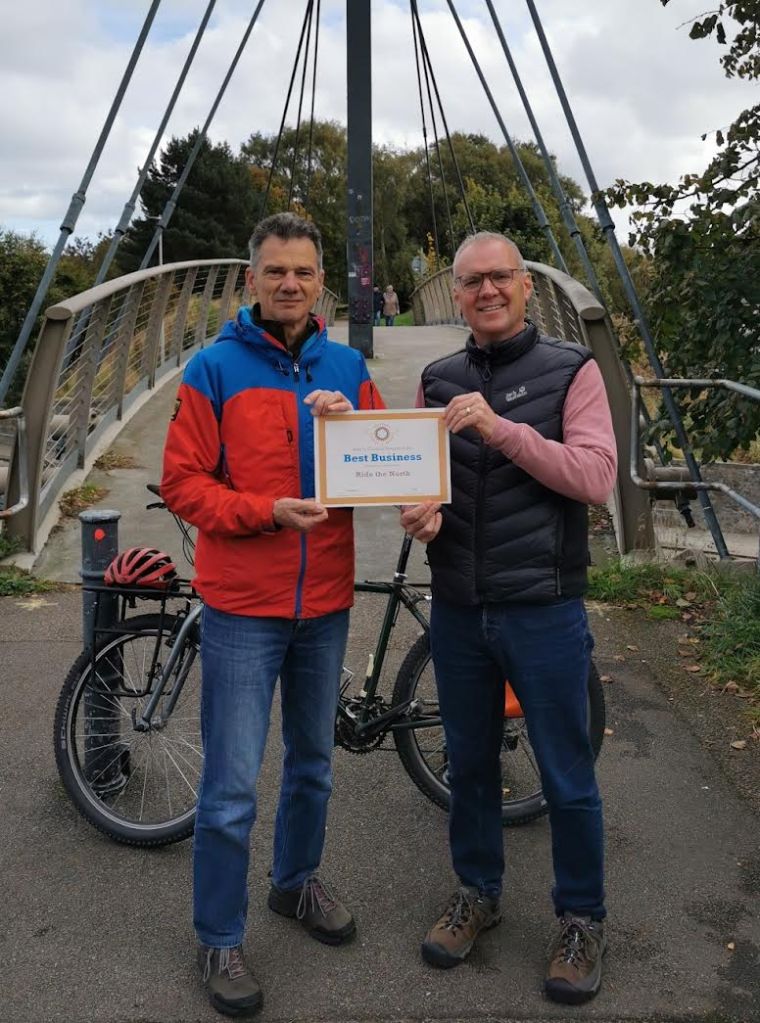
Best Business – Ride the North

Many of you will be familiar with Ride the North and don’t need us to tell you what a great cycle event it has become and an established date in the cyclist’s calendar.  The emphasis is always on fun, the communities, and on top of that, since 2011 it has raised in excess of £2M for a range of charities. We’re already looking forward to RtN 2025!

Ride the North receiving their award for best business.

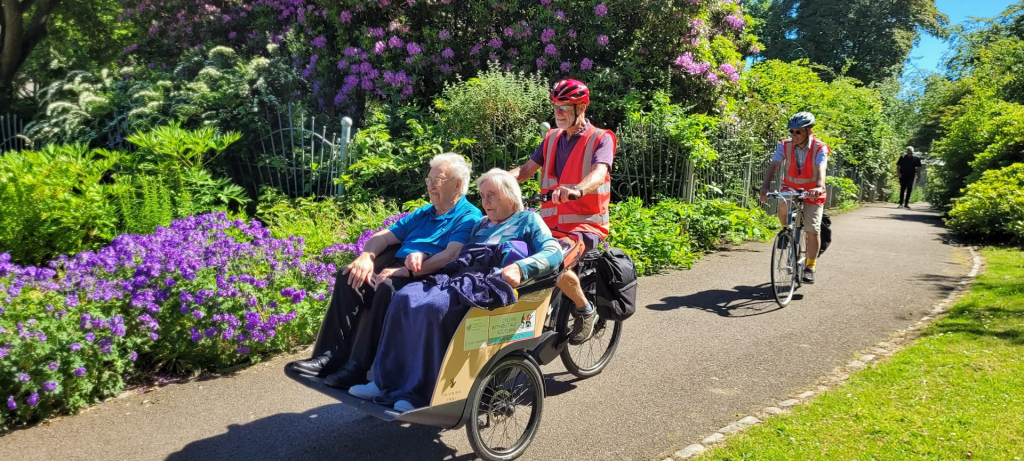
Cycle Heroes (Best community / volunteer project) – Cycling Without Age (Scotland) Aberdeen City

Before we say a bit about the winner, we were also impressed by the other worthy nominations so congratulations also to runners-up: Martin Sharman (CM Aberdeen), Clare Tayler (Harlaw Academy) and Middlefield Community Project Bike Hub.  There are so many positive things happening in the world of cycling!

Cycling without Age (Scotland) has only been operating in Aberdeen for two years but they are making a huge impact and have recently been able to expand their fleet of ‘Trishaws’ such that they are now able to work with several care homes across the city.  They are always on the look-out for new volunteer pilots, so get in touch if you can spare some time.    Welcome to Cycling Without Age Scotland

Cycling without Age

The Cycle Raspberry –  SUVs

Nominations for the Raspberry included some of our poor quality – or just missing – infrastructure, some bad examples of cycle parking provision, old and new, and one very dangerous roundabout.  But the winner (voted for by the public) is SUVs.   No one can have failed to notice that cars are getting bigger and the proportion of SUVs in the city seems to be increasing exponentially.  Cars get bigger and bigger but our streets don’t, so the logical result is that there is less room for everyone else, including cyclists. 

Best in Cycling Awards Aberdeen 2024

Aberdeen Cycle Forum is hosting the Best in Cycling Awards for 2024 next Tuesday 24th September at 7:30pm where we’ll announce the winners in the following categories: Best Business, Best Employer, Best New Cycle Infrastructure, Best Public Cycle Parking, Best School, Cycle Hero, and The Cycle Raspberry.

We’ve also got two guest speakers lined up: Linda Moreno Sanchez who worked for the Transportation Department in Mexico before coming to Aberdeen and Fiona McBain who delivers Bikeability in schools for Sustrans.

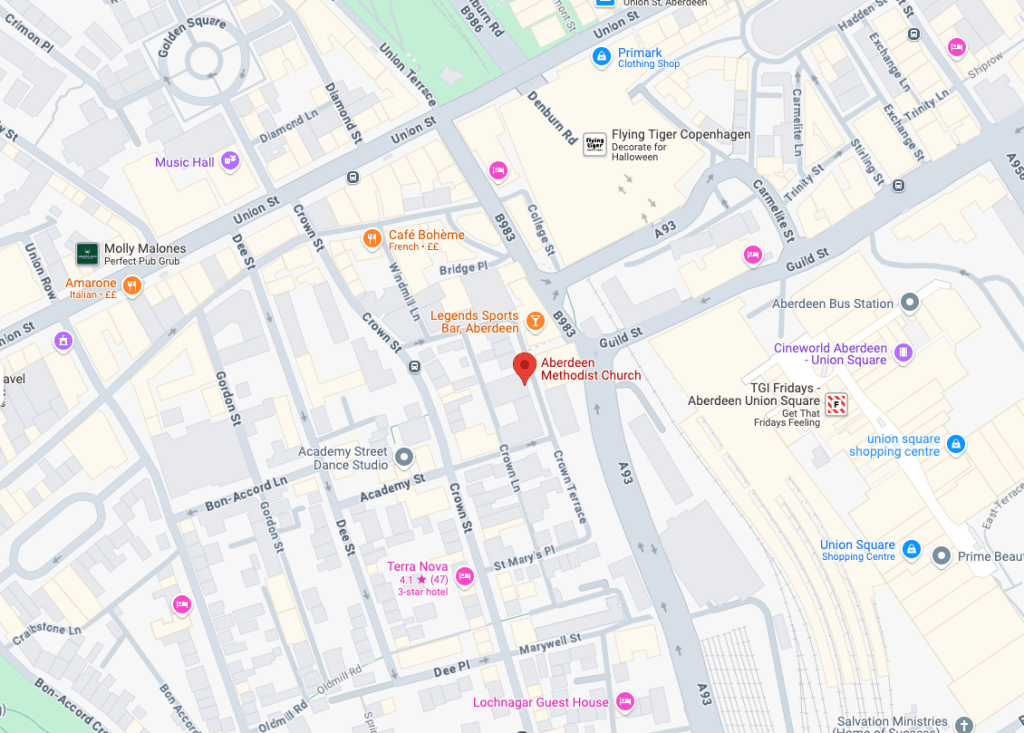
The venue is Aberdeen Methodist Church on Crown Terrace. Doors open at 7pm for a 7:30pm start.

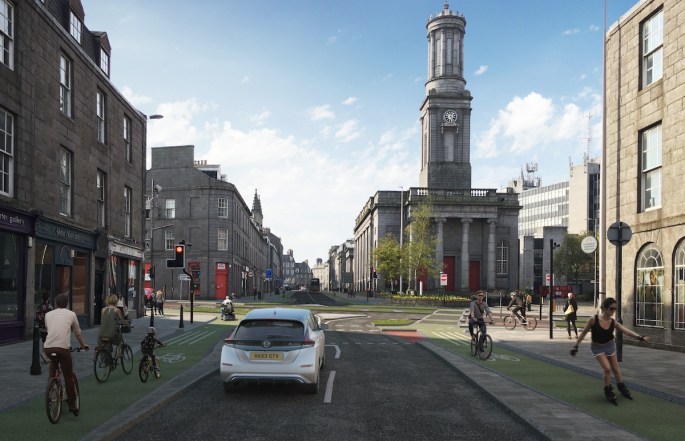
King St with cycling infrastructure.

Aberdeen Cycling Awards 2024

Aberdeen Cycle Forum is pleased to announce the launch of the 2024 Aberdeen cycling awards. We’re looking for nominations to recognise improvements in conditions for cycling.

We last ran the awards in 2019 with winners announced in 2020. This year entries close at midnight on 31st July 2024 with winners announced at a special event in September.

Register and submit your nomination now at the link below.

Enter now!

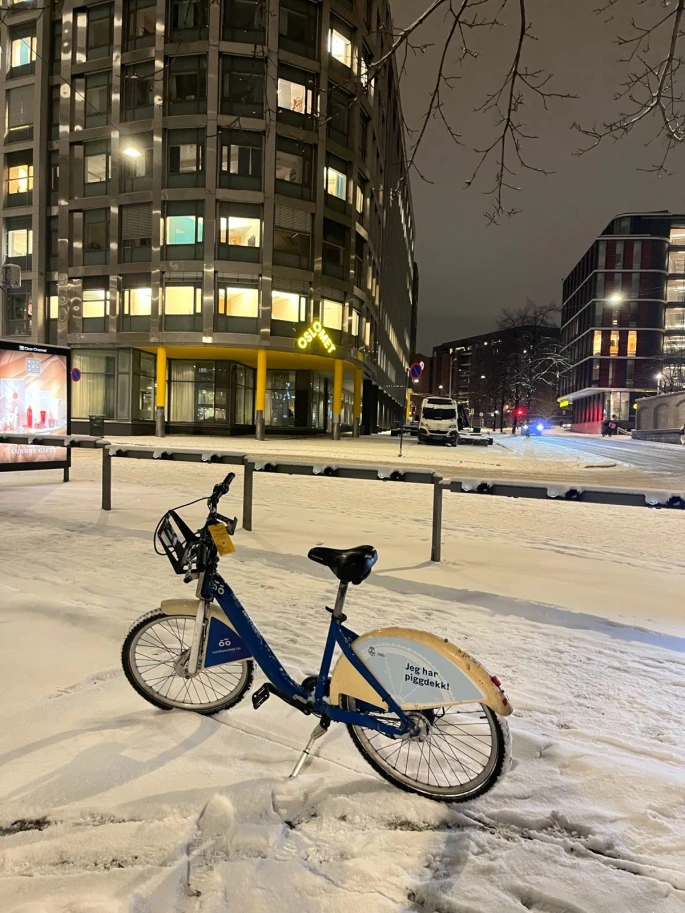
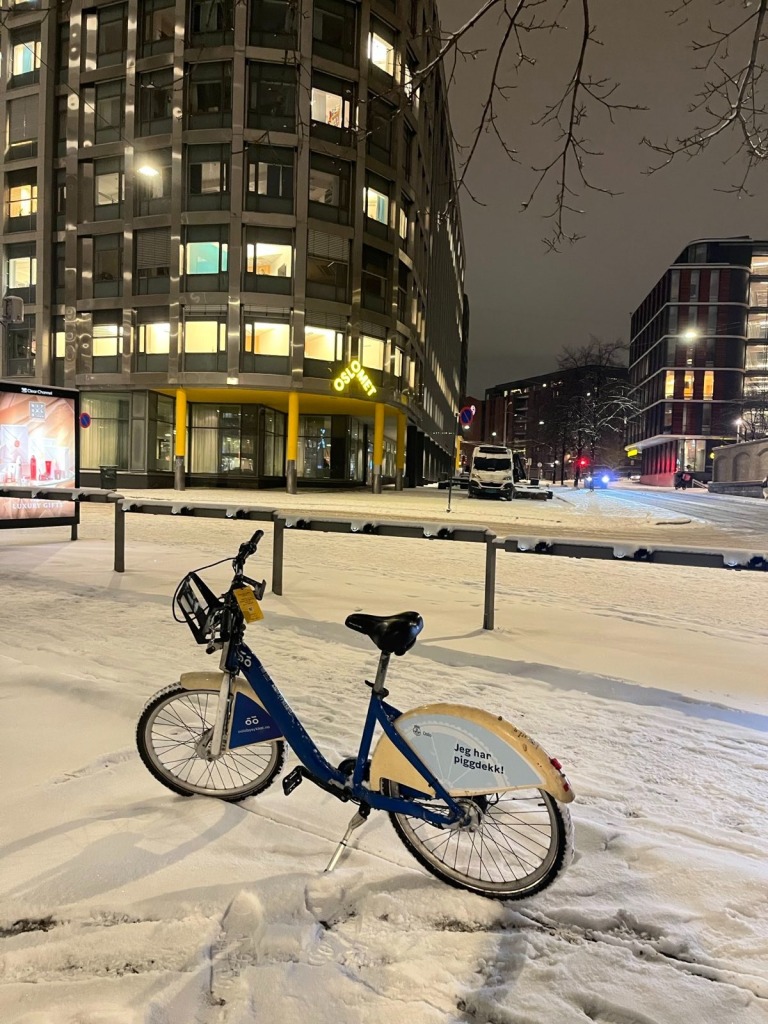
Oslo city bike in the snow.

Spotlight on a cyclist – Nicolò Silvani

What is your name, where are you from and how long have you been in Aberdeen (if not local)?

I am originally from Italy, but I lived in Aberdeen between 2015 and 2022 – with some time in Glasgow for my postgraduate degree in late 2019-early 2020. I now live in Oslo, Norway.

How did you get into cycling?

I used to cycle as a kid and teenager, but then stopped from around the age of 16 – when I got my moped and then car licenses. I got back into cycling in 2020, when lockdown restrictions lowered and longer outdoor activities were allowed. My then-flatmate had two bikes and he took me on a couple of day tours around Glasgow. I then continued cycling using the city bikes there, as it was faster, safer (due to Covid) and more fun than using public transport.

What kind of cycling do you do?

I cycle for commuting purposes nearly daily whenever I can, just not when it’s -20C in Oslo – not yet anyway, I have cycled multiple times at -10C for short rides!

A blue Oslo city bike on a snowy pavement.

Between Spring and Autumn I also love to get on my bike to explore more of Oslo’s forests, usually once or twice a week, and to do grocery shopping.

What type of cycle do you use?

A Specialized Sirrus 2, with wider tyres from the X series. I bought this bike in Aberdeen, but then brought it with me to Norway.

I also use the Oslo City Bikes, also in winter as they come with studded tyres at that time of the year.

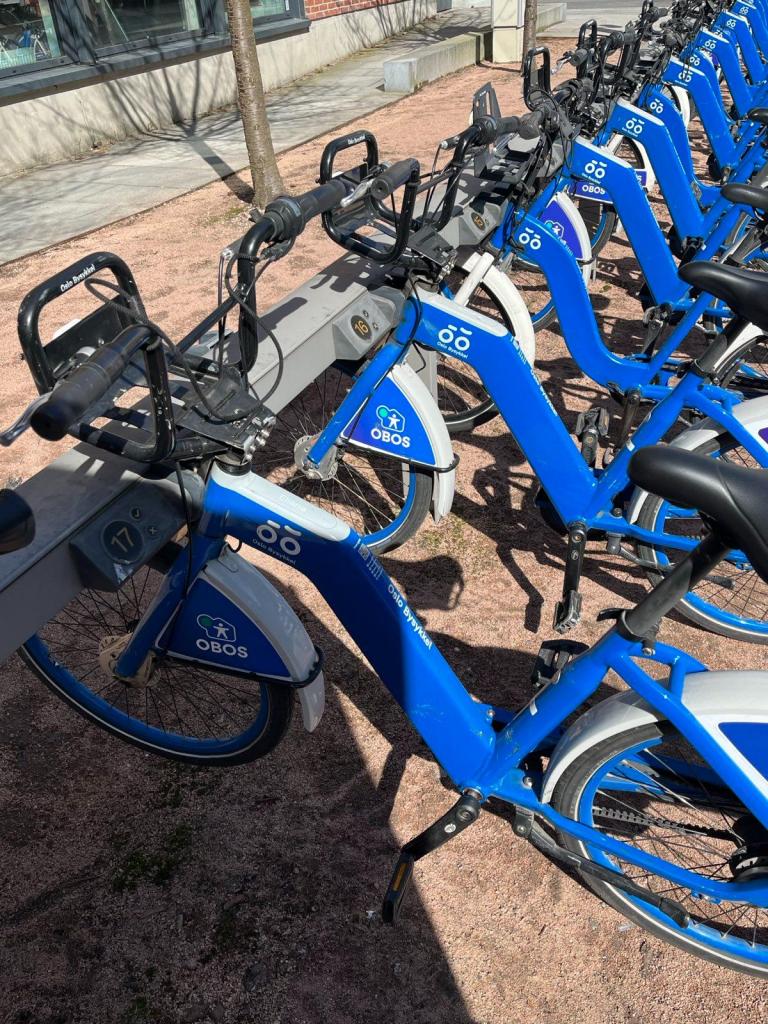
Row of Oslo city bikes, all blue with racks on the front.

I did use a Tern HSD (an e-cargo bike) last year for Spring and Summer, for longer trips, grocery shopping, and generally when taking more stuff with me; I got the bike through an Oslo-based company called Whee, who rent out e-cargo bikes to “urban families” as their main customers. You pay a monhtly fee, and the bike is yours to keep home for as long as you are a member, plus they cover maintenance and theft (in the unfortunate case it happens).

Where do you cycle usually/any favourite routes? How often?

When I used to live in Aberdeen, often towards Seaton Park-Beach Espalande, or going up the river Don following the shared path to and past the Diamond Bridge. I also used to work at RGU, so the Deeside Way was also a favourite route; it has so much unfulfilled potential!!

In Oslo, there are virtually unlimited options, as something like 70% of the city council area is forested, with most tracks usually open only to walkers, cyclists and locals, and cross-country skiers in the winter.

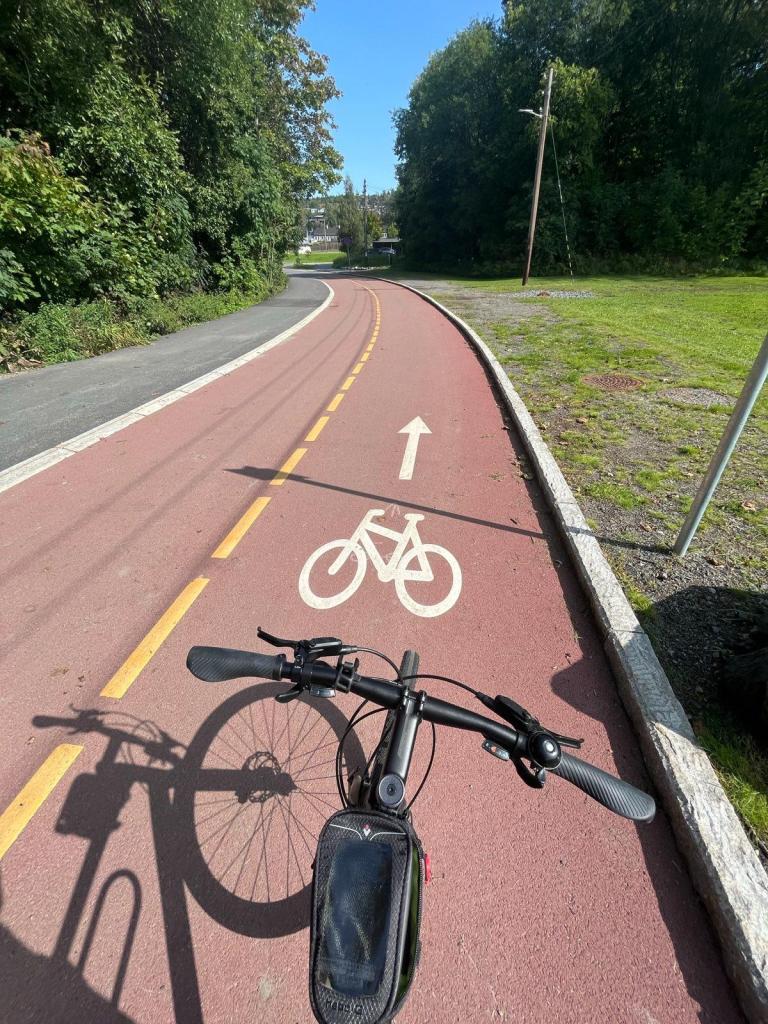
Segregated cycle path in Norway.
I also like to cycle along the waterfront – often including a swim. People that have lived in Oslo for a few decades tell me that the waterfront is unrecognisable from the 90s, with a 2000-2030 initiative called Fjordbyen (the Fjord City) that is connecting 9km of waterfront with the city, replacing fencing and port zones with new residential, commercial and green space areas.

What would you like to see to improve your cycling experience?

With the new experience from Oslo, but also having cycled in Glasgow, Aberdeen has a long way to go. Even though I consider myself quite confident cycling, I still used to make detours in the city to actively avoid certain streets or roads. There are some main barriers across the city that I imagine stop people from cycling: (North) Anderson Drive and most bridges at both rivers are some of the examples I can think of.

For sure, more and high-quality cycling infrastructure is key, but quieter streets and contraflow cycle lanes can also enable a wider cycling network, at lower costs and faster implementation.

Another difference I notice between the UK and Oslo is how much more careful, and proactive, drivers are in prioritising vulnerable road users, pedestrians and cyclists, in the latter. I’ve rarely come across road rage, there seems to be a mutual understanding that we are all getting from A to B, just in different ways. The high % of electrification in the transport sector, both private and in public transport, also helps in the sense that I don’t breathe in bad air, and noise-wise streets are quieter too.

Finally, and again from experience, I can’t see a widespread cycling culture being a possibility in Aberdeen until public transport is taken seriously. If you want people to give up their cars, they need to have valid and complementing alternatives. Public transport and cycling really do go hand-in-hand.

Any top tips for someone considering cycling in the area?

There are some pleasant cycle or shared paths that if you are lucky enough to live near to are worth trying out: thinking about the Deeside Way, and alongside the River Don from Seaton Park to Diamond Bridge.

You also don’t need to buy a bike/commit to the purchase to try cycling a few times. Initiative like BeCycle and RGU BikePad can make access to a bike affordable.

I also really think that ebikes are a game-changer – at least they were for me! – if you are worried about cycling on hilly roads or with cargo, they really help. The Big Issue eBikes scheme can be a nice idea to try ebikes for the first time and see how you feel.

Celebrating 20 years of Aberdeen Cycle Forum

On 3rd October we met to celebrate 20 years of Aberdeen Cycle Forum (ACF).  Without being too pernickety about the exact date, ACF was formed around this time of year in 2003.  

The meeting was introduced by current Chair, Gavin Clark, who gave a resume of some of the activities ACF has been involved in.  Gavin also read a few paragraphs from Derek Williamson who was one of the founders and a long-standing former Chairperson.  Derek and others recapped that ACF arose partly as a result of a spate of cycle fatalities around Aberdeen and the sense that “something need to be done” to improve matters.  Of course we recognised too that although there has been some progress, there is much much more to be done and in some ways Aberdeen has fallen behind by not sufficiently recognising the benefits from cycling and providing the infrastructure to facilitate it.  Despite our lack of high quality infrastructure, we also noted that cycling is in a good place with high levels of uptake of recreational cycling, and some “game-changers” like e-bikes on the cusp of bringing real transformation.

We had two guest speakers, firstly Emma Roberts of Aberdeenshire Bike Bothy, who told us a bit about the outreach and development work they do.  It is mainly based around selected ‘travel towns’ in Aberdeenshire and doesn’t operate in the city, which is purely down to funding availability.  We hope that might change.

Our second speaker was Alistair Gilmore who is Administrator and a volunteer ‘pilot’ with Cycling Without Age (Scotland).  It was uplifting to hear about this project and something we look forward to seeing more of in the future.

Welcome to Cycling Without Age Scotland

The second half of our meeting was a Question & Answer with Councillors Ian Yuill and Miranda Radley of Aberdeen City Council.  We had a good discussion and lots of interesting questions.  Both Councillors were fairly candid in recognising that we aren’t starting from the best place in terms of delivery of cycle infrastructure.  Both also seemed genuinely committed to get the current Administration working to change things, whilst also recognising that it won’t necessarily happen overnight.  The recent decision to install a segregated cycle lane on central Union St (and hopefully the rest of Union St in due course) was acknowledged as a good ‘win’ and a signal of their intent.

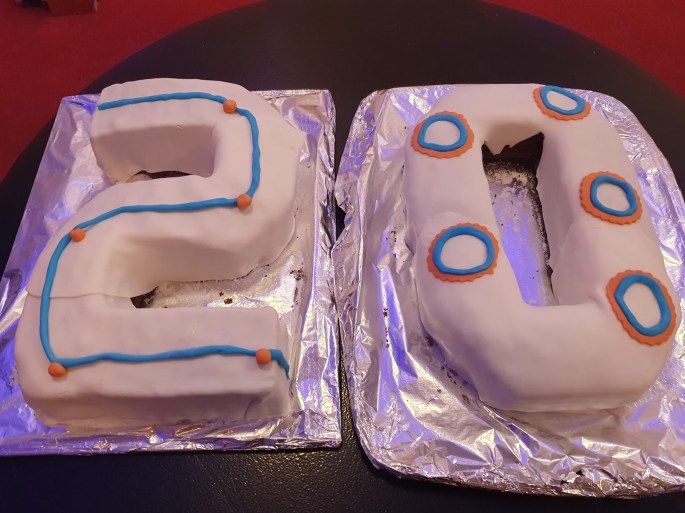
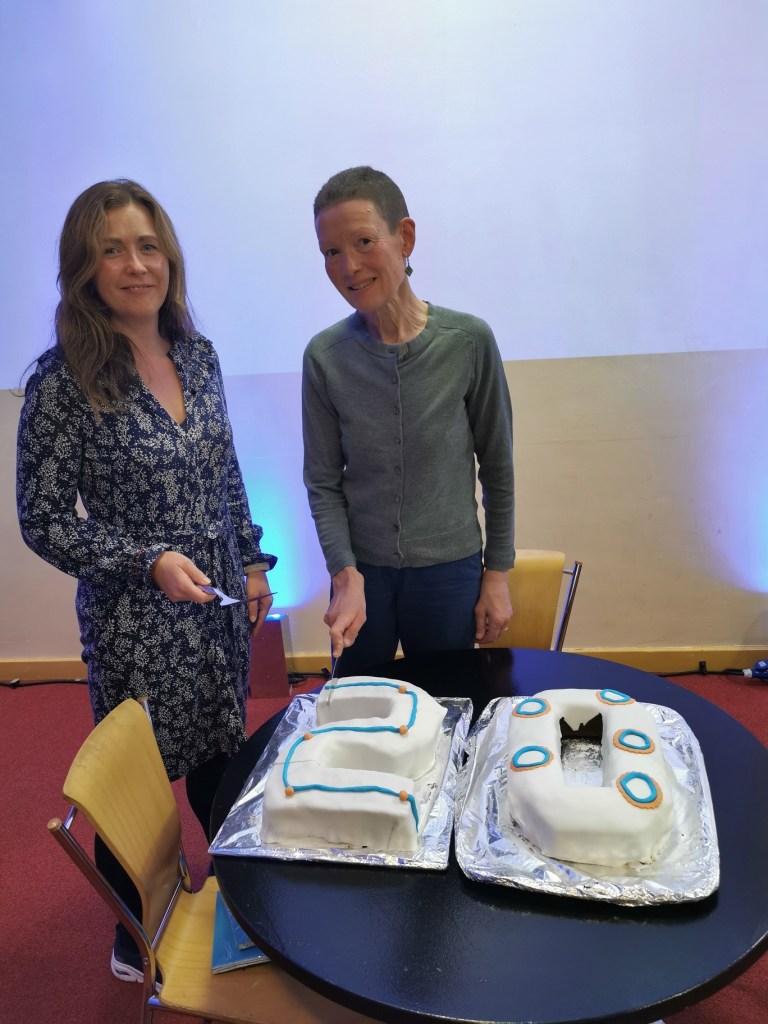
Of course we couldn’t have a 20th Anniversary meeting without a birthday cake and ACF Secretary Fiona McDonald excelled with a tasty and appropriately decorated cake which was enjoyed by all.  Cutting the cake we had Louise Napier of Aberdeen City Council and Sheila Rusbridge of CTC Grampian, who were the two individuals present who had been involved in the set-up and early meetings of ACF 20 years ago.

Cutting the cake!
Gavin speaking to the crowd

Aberdeen Cycle Forum celebrates 20 years!

Twenty years ago on Tuesday 30th September 2003, Aberdeen Cycle Forum had its inaugural meeting. You can read the minutes of that meeting, which outline the attendees, what they discussed, and why the forum was created. Aberdeen Cycle Forum has held monthly meetings in the 20 years since with all the minutes publicly available on our website.

We’re still run entirely on volunteer steam. Over the years we’ve responded to countless consultations, organised protests, run competitions and campaigns, provided cycling lessons to locals, commissioned street art for the cycle network, provided feedback to the council on cycling-related issues and even organised a litter pick.

To celebrate our 20 years we’re having a special event on the 3rd October 2023 at 7pm in the Arts Centre on King Street. To mark the special occasion we’ve got three guest speakers: one from Cycling without Age Scotland, one from Aberdeenshire Bike Bothy, and Aberdeen’s very own para-athlete, Joanna Robertson. There’ll also be a Q&A with Aberdeen City Council co-leader Ian Yuill and Councillor Miranda Radley. A café and bar will be available so come and celebrate 20 years with us!

Max about to embark on his cycle ride to Banchory

Cycling in Aberdeen: a tourist’s perspective

It has been a pleasure to visit my daughter and family who live in the beautiful city of Aberdeen. Following an energetic 2 month bike-riding / sight-seeing tour of France, Sweden and Norway, it felt good to relax with family. 

Being a keen e-bike rider and due the generosity of a friend, I was able cycle many of the streets and paths of Aberdeen. In this letter, I wish to share some thoughts about bike access in your city.

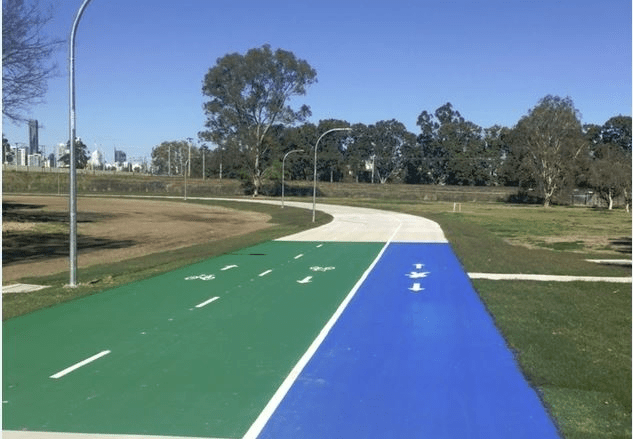
As background, I am from Brisbane Australia and still young at age 76. I took up e-bike riding 2.5 years ago, encouraged by Brisbane’s extensive network of cycleways and shared pathways. It is such a fun way to get around and is now my preferred mode of travel to destinations such as shops, parks, cafes, train stations, and University. One-third of people in Brisbane live within 300 metres of a cycleway and almost two thirds live within one kilometre.

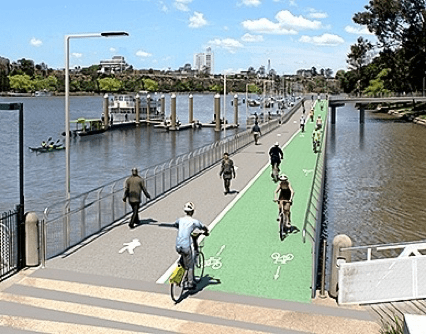
Segregated cyclepath in Brisbane beside a pedestrian pathway.

Brisbane City Council has plans to extend and develop cycleways even further. From their perspective, the network not only improves access to local destinations and the CBD, but also helps to minimise traffic congestion. There has been a huge positive response by our citizens, young and old, and especially recently retired senior citizens who have taken up cycling with great enthusiasm. What better way to enjoy the outdoors with friends, enjoy a healthier lifestyle, than getting outside for a bike ride?

As people get older some may find it easier to cycle an e-bike than to walk as our hips and knees start to object to the more jarring of physical activity. In this way a bicycle acts as a mobility aid, offering transportation and therefore independence to people of all ages and abilities.

The extensive network of separate cycleways ensures that we can cycle safely away from fast-moving motorised traffic. Many of the most used cycleways also separate cyclists from pedestrians. It makes it safe for families taking young children to kindy or for family outings on weekends. There are no downsides.

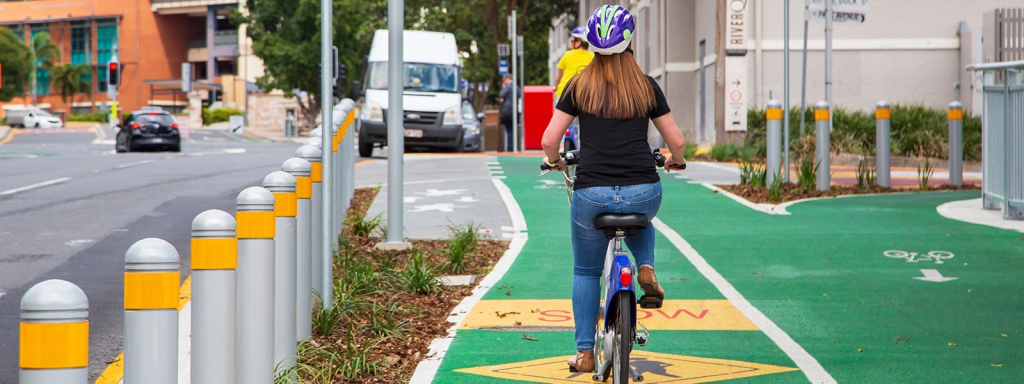
Here is a selection of photos of Brisbane cycleways.

Brisbane cycleway with the city buildings in the background
Cycleway in Brisbane next to a road with traffic.
Cycleway in Brisbane at a junction.
Cycleway in Brisbane going over a bridge.

A woman cycling along a segregated path in Brisbane

As mentioned, my stay here in Aberdeen has been greatly enhanced by having access to an e-bike. I have cycled through the city, along the eastern beach esplanade path, around Seaton Park and the River Don, and along the south coast road. However, at times I have felt a little threatened by traffic, especially accessing the city centre, as you have few cycleways that separate cyclists from motorised traffic. Cycling on pavements is not ideal for pedestrians.

As a visitor, I am sure that future investment by the council to improve this situation  would be welcomed by locals as well as tourists. Experience tells us that building new motorways attracts more traffic; likewise, building cycleways attracts bicycle traffic, the more desirable outcome.

This week I rode to Banchory and back on the Deeside rail trail. A delightful experience. However, it could be improved by management of the track surface and encroaching vegetation, as well as restricting on-road travel sections to a minimum; and maybe better signage for novice riders. This could be a wonderful attraction for tourists, with local castles along the way, an added attraction. My original plan was to ride all the way to Ballater but I was discouraged by lack of a dedicated cycleway between Banchory and  Aboyne.

I will continue to be a regular visitor to your wonderful city and look forward to enjoying any cycleway upgrades that you construct.

Yours sincerely,

Max Shelton

17 June 2023

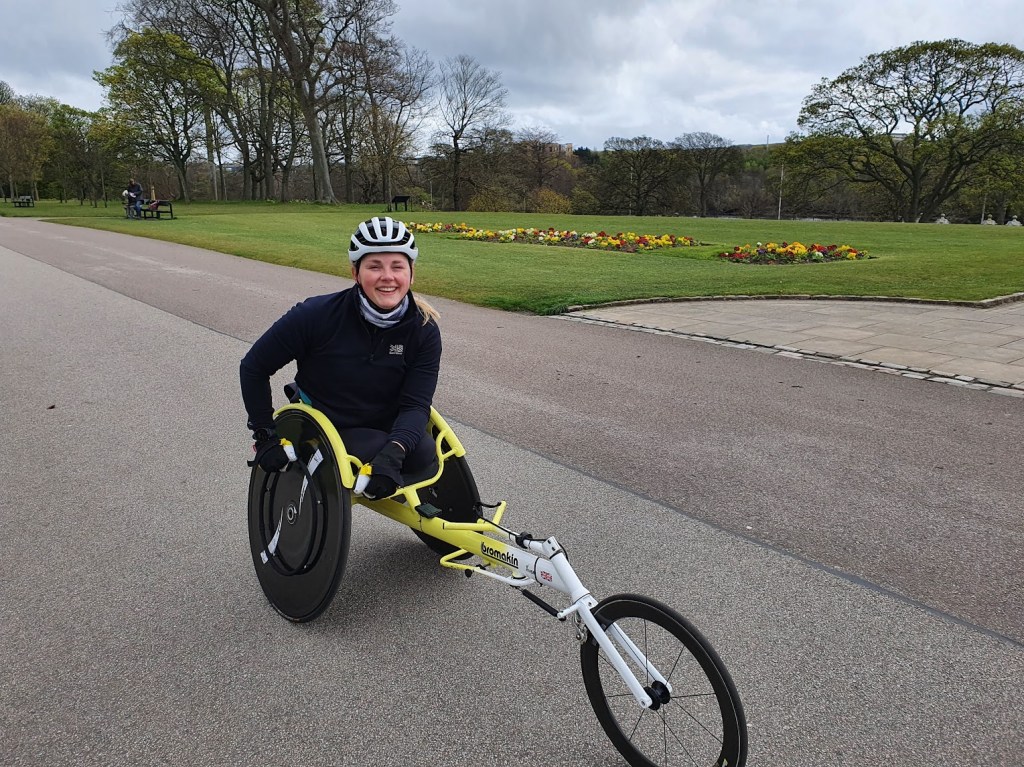
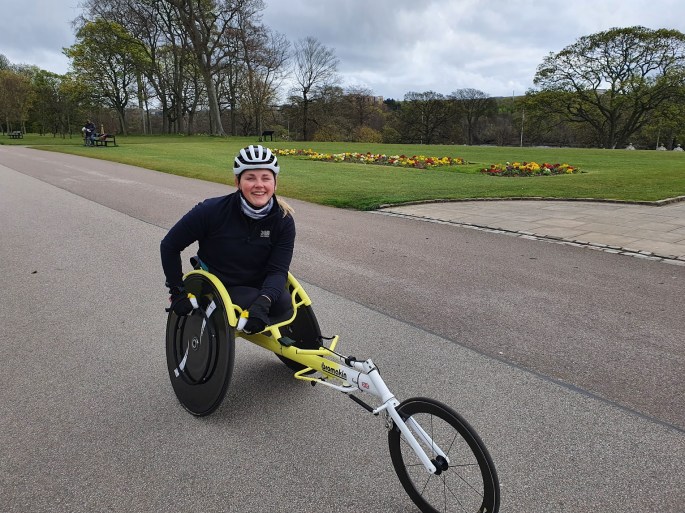
Joanna smiling on her handcycle at Duthie Park.

“A whole new sense of freedom”

I had the great pleasure of meeting the delightful Joanna Robertson today. She was training on her handcycle at Duthie Park.

Joanna is a local athlete who uses her handcycle to compete in sporting events like the London marathon. She’s currently training for the Edinburgh and Manchester 10k marathons. Normally she gets around by wheelchair because of a spinal injury but having a handcycle as a mobility aid has given her “A whole new sense of freedom”.

I asked Joanna what the biggest issues are for her cycling in Aberdeen? Without hesitation she replied with potholes. Potholes are especially problematic for people with disabilities as it’s not easy to stand up when going over the bump, making it even more jarring. Another issue is tree roots.

Joanna sticks mostly to off-road paths like Deeside Way and the beach because being so low to the ground, as is often the case for people using handcycles, she’s particularly vulnerable to much larger vehicles who are less likely to see her. This is another very good reason why Aberdeen needs a network of segregated cycle paths.

If you’d like to learn more about Joanna and follow her sporting journey then visit her Facebook page – Joanna Robertson T54 WC.

Hasta la Vista, Union St

The debate over whether Union St should be pedestrianised or not has rumbled on for decades so it’s not surprising that it continues to be a bone of contention.  The Covid-related ‘Spaces for People’ measures saw the central section, from Bridge St to Market St, closed to traffic and the Council seemed keen to keep that in place.  We’d taken part in various discussions with designers working on behalf of the Council who were coming up with ‘streetscape’ designs for how it could look. We’d even got as far as discussing some of the finer details as to how, for example, cycle lanes could be routed around bus stops.

But then back in May we had a local government election resulting in a new Administration: out went the old Lab-Con alliance and in came a new SNP-LibDem one instead.  Soon followed a decision to re-admit buses to the closed central section of Union St, and suddenly all the streetscape designs were back to square one, and astonishingly the new designs had no cycle lane infrastructure at all.

The Council ran a short consultation in October seeking public views on the new designs, and by far the greatest number of comments fed back were in relation to the lack of active travel provision.  There were two worrying trends:  firstly, a false narrative that because buses were back on Union St, there wasn’t room for a proper segregated cycle lane.  Secondly, because they were designing-out a cycle lane for the central section, it seemed to follow that they thought they didn’t need one on the east and west sections of Union St either.  Despite the consultation responses, the recommendations put before Councillors for a decision on 14 December were to approve these new designs which would effectively leave cyclists mixing with buses on the central section, and mixing with all traffic on the remainder.

Whatever had happened to the City Centre Masterplan, passed unanimously by Council in 2015, and which promised to deliver “a cycling city”.  What about the Sustainable Travel Hierarchy, enshrined in national and local transport policy, which is very clear that designs should cater for pedestrians first, and then cyclists, before considering public transport and other vehicles?

In the run up to the Council meeting we’d run a campaign to bombard co-leader of the Council Ian Yuill with postcards highlighting the need for proper segregated cycle lanes on Union St.  We’d also managed to meet with Cllrs Yuill and Miranda Radley, from the respective parties forming the administration, and also Cllr Kate Blake to make our point. 

At the Council meeting itself, both Rachel Martin on behalf of ACF, and Jon Barron on behalf of Grampian Cycle Partnership had requested a ‘deputation’ in other words the opportunity to speak to the meeting.  Both did an excellent job of putting the case for segregated cycle lanes and highlighting just how much at odds the recommendations before Councillors were with current policies and the desire to create an active travel network in the city.

In her presentation, Rachel described cycling amongst buses on Union St currently as being reminiscent of a scene from The Terminator.   The press picked up on that and had great fun with the analogy in items which appeared in the P&J and Evening Express in the following days.

Segregated cycle lanes for Union Street to be considered (pressandjournal.co.uk)

Truck-chase scene from Terminator 2

The decisions taken at the meeting now mean that central Union St will remain much as it is at the moment in terms of traffic access and so bikes will still have to mix with buses and service vehicles.  However speed limits for buses (similar to Broad St) will be looked at again.  And in a critical change from what had been recommended, officers have now been instructed that designs being developed for east and west Union St, and some other city centre streets being redeveloped, should include options for segregated cycle lane infrastructure.  It will be several months before we see those designs, so this isn’t the end of the discussion and no doubt there will be more battles along the way to ensure that cycling is properly provided for.  We’ve also taken the novel step of submitting a formal “participation request” under the Community Empowerment (Scotland) Act, to try and improve the process and ensure that cyclists’ voices are listened to.

Our thanks to Rachel and Jon who put their arguments so eloquently, and to those Councillors who listened and voted to amend the plans.