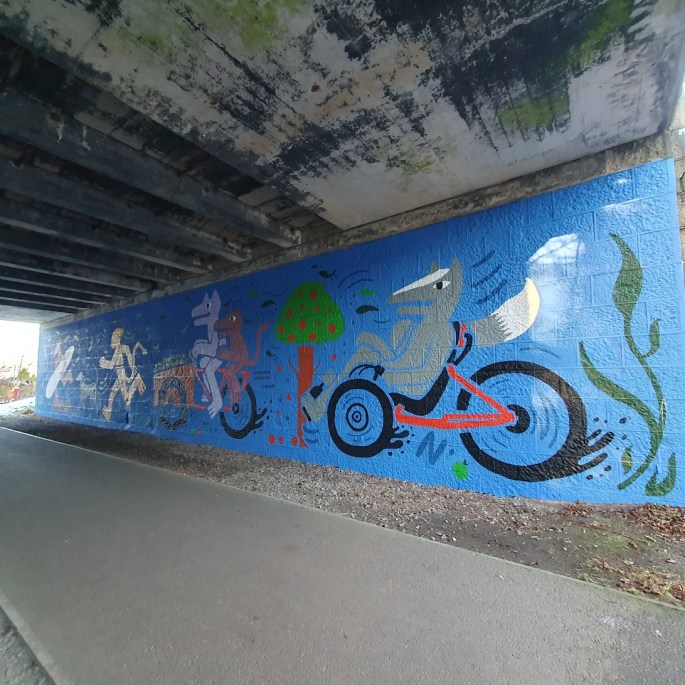
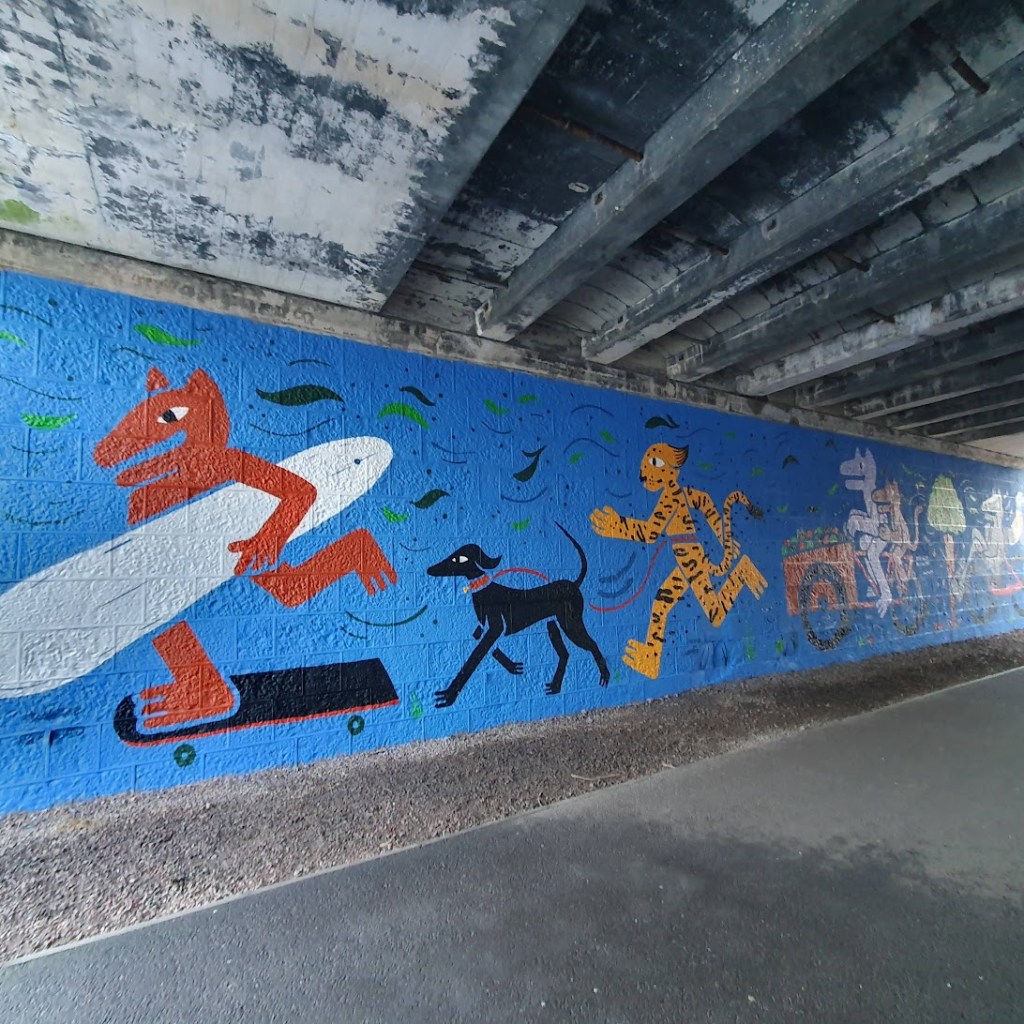
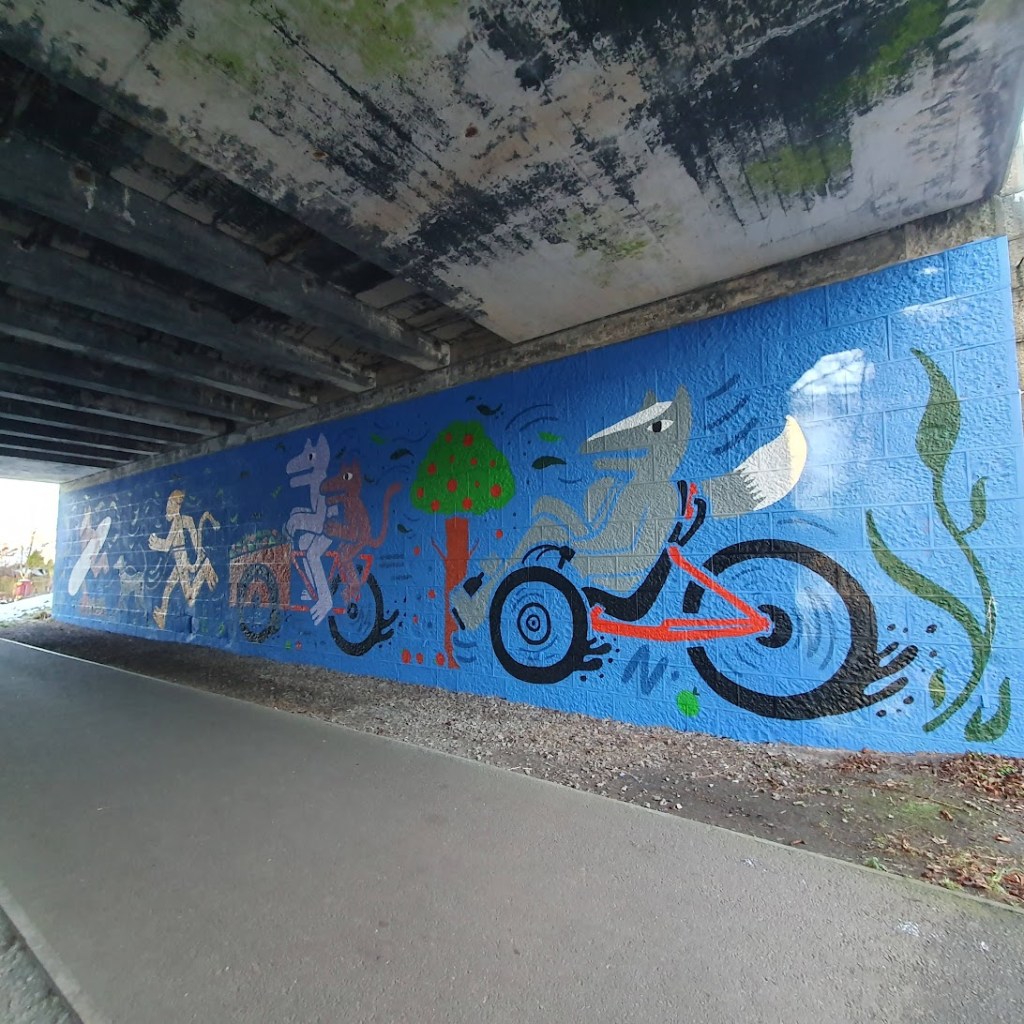
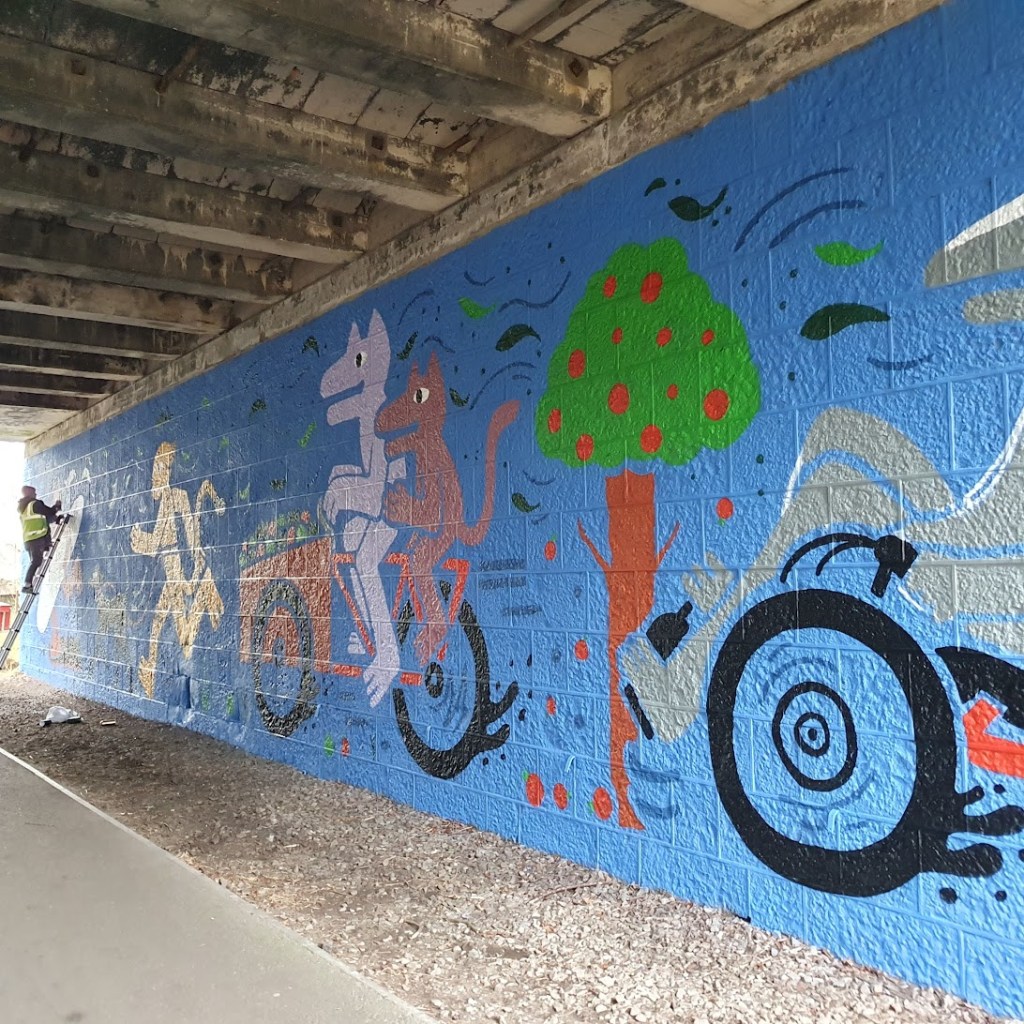
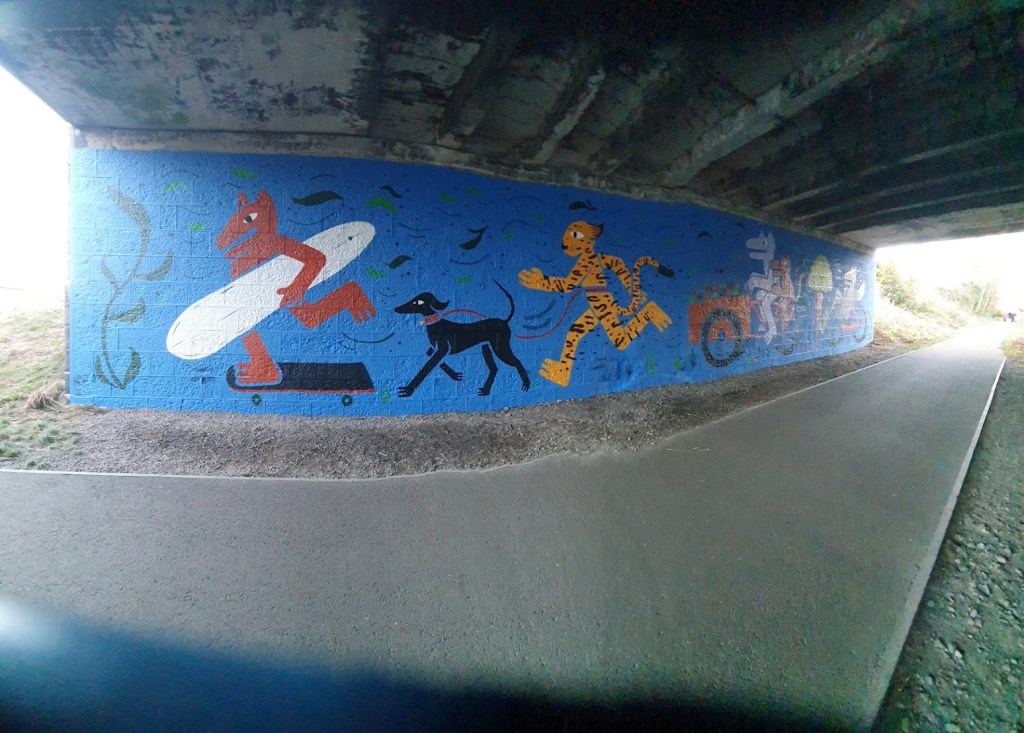
Silver-haired cyclist on a recumbent at one end of the painted wall.

New artwork for Deeside Way

Last year Aberdeen Cycle Forum commissioned some artwork for Deeside Way, opposite the wall we had painted a few years ago. The same artist – KMG Yeah – came up with the design and completed it just before Christmas last year.

We’re delighted with the end result which features a leopard – the symbol of Aberdeen – a surfer to represent the nearby beach, a local dog called Trufa, a cargo bike filled with local produce, and a silver-haired cyclist on a recumbent.

The funding for this is thanks to a grant from Sustrans ArtRoots.

Hasta la Vista, Union St

The debate over whether Union St should be pedestrianised or not has rumbled on for decades so it’s not surprising that it continues to be a bone of contention.  The Covid-related ‘Spaces for People’ measures saw the central section, from Bridge St to Market St, closed to traffic and the Council seemed keen to keep that in place.  We’d taken part in various discussions with designers working on behalf of the Council who were coming up with ‘streetscape’ designs for how it could look. We’d even got as far as discussing some of the finer details as to how, for example, cycle lanes could be routed around bus stops.

But then back in May we had a local government election resulting in a new Administration: out went the old Lab-Con alliance and in came a new SNP-LibDem one instead.  Soon followed a decision to re-admit buses to the closed central section of Union St, and suddenly all the streetscape designs were back to square one, and astonishingly the new designs had no cycle lane infrastructure at all.

The Council ran a short consultation in October seeking public views on the new designs, and by far the greatest number of comments fed back were in relation to the lack of active travel provision.  There were two worrying trends:  firstly, a false narrative that because buses were back on Union St, there wasn’t room for a proper segregated cycle lane.  Secondly, because they were designing-out a cycle lane for the central section, it seemed to follow that they thought they didn’t need one on the east and west sections of Union St either.  Despite the consultation responses, the recommendations put before Councillors for a decision on 14 December were to approve these new designs which would effectively leave cyclists mixing with buses on the central section, and mixing with all traffic on the remainder.

Whatever had happened to the City Centre Masterplan, passed unanimously by Council in 2015, and which promised to deliver “a cycling city”.  What about the Sustainable Travel Hierarchy, enshrined in national and local transport policy, which is very clear that designs should cater for pedestrians first, and then cyclists, before considering public transport and other vehicles?

In the run up to the Council meeting we’d run a campaign to bombard co-leader of the Council Ian Yuill with postcards highlighting the need for proper segregated cycle lanes on Union St.  We’d also managed to meet with Cllrs Yuill and Miranda Radley, from the respective parties forming the administration, and also Cllr Kate Blake to make our point. 

At the Council meeting itself, both Rachel Martin on behalf of ACF, and Jon Barron on behalf of Grampian Cycle Partnership had requested a ‘deputation’ in other words the opportunity to speak to the meeting.  Both did an excellent job of putting the case for segregated cycle lanes and highlighting just how much at odds the recommendations before Councillors were with current policies and the desire to create an active travel network in the city.

In her presentation, Rachel described cycling amongst buses on Union St currently as being reminiscent of a scene from The Terminator.   The press picked up on that and had great fun with the analogy in items which appeared in the P&J and Evening Express in the following days.

Segregated cycle lanes for Union Street to be considered (pressandjournal.co.uk)

Truck-chase scene from Terminator 2

The decisions taken at the meeting now mean that central Union St will remain much as it is at the moment in terms of traffic access and so bikes will still have to mix with buses and service vehicles.  However speed limits for buses (similar to Broad St) will be looked at again.  And in a critical change from what had been recommended, officers have now been instructed that designs being developed for east and west Union St, and some other city centre streets being redeveloped, should include options for segregated cycle lane infrastructure.  It will be several months before we see those designs, so this isn’t the end of the discussion and no doubt there will be more battles along the way to ensure that cycling is properly provided for.  We’ve also taken the novel step of submitting a formal “participation request” under the Community Empowerment (Scotland) Act, to try and improve the process and ensure that cyclists’ voices are listened to.

Our thanks to Rachel and Jon who put their arguments so eloquently, and to those Councillors who listened and voted to amend the plans.

Visualisation of Union Street with a cycle path

Bike path for Union Street

We’ve started a petition for a segregated cycle path on Union Street in Aberdeen. Please follow the link below to sign it. Note: you will need to confirm your email address on the site to have your signature confirmed.

https://www.change.org/p/build-a-cycle-track-on-union-street-in-aberdeen/dashboard

We initially tried to create this petition on the Aberdeen City Council website. On September 21st 2022 we submitted exactly the same wording to the council’s ePetition form. After more than a month and many followup emails which received no reply we contacted someone else at the council who informed us the petition had been rejected. When we looked online this morning it didn’t say rejected but “Requested”. I pointed this out to the person who eventually responded and shortly after the word got changed.

I asked why the petition was rejected and was given this reason:

“The Council of 29 June 2022 considered various options for Union Street Central within the City Centre Masterplan Update report RES/22/137. These options included for segregated cycle routes. The Council chose an alternative option.”

If the council had already decided what they were going to do on Union Street in June then why have a consultation and gather feedback from the public in October?

Spotlight on a cyclist: Martin Sharman

  1. What is your name, where are you from and how long have you been in Aberdeen (if not local)?

My name is Martin, I grew up in Aberdeen and the Shire and left when I was 18 years old to go explore the world. I ended up finding myself coming back to the city through an unexpected turn of events a couple years back.

  1. How did you get into cycling?

I have always had a bike of sorts in my life, mainly for getting from A-B. I would not class myself as an avid cyclist enthusiast in terms of it being a regular hobby nor me striving for personal stats and Strava titles, but I do enjoy it when I am on a bike.

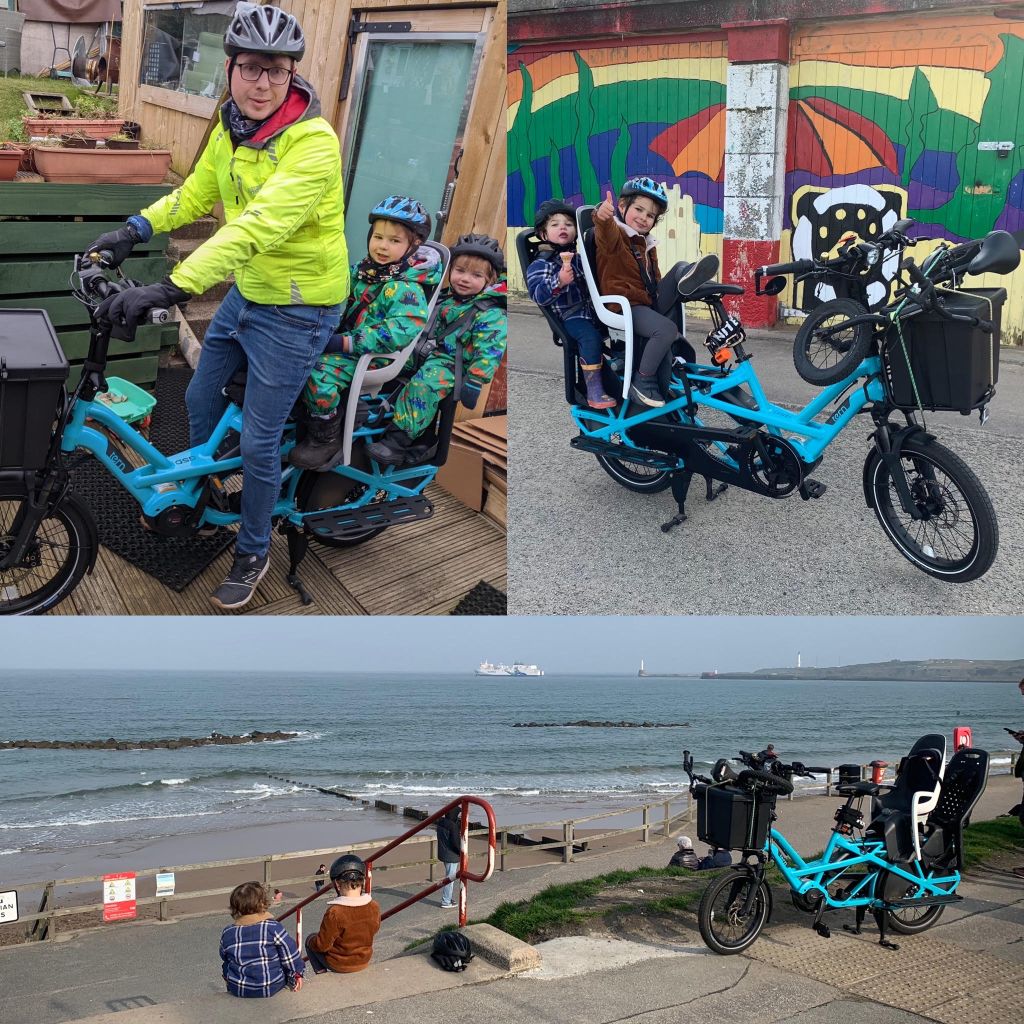
I had not cycled for quite a while but the Covid-19 situation got me back into it again more recently, and led to the purchase of an eCargo bike for the family.

  1. What kind of cycling do you do?

I mainly use the bike for commuting to work; dropping off, and collecting the children from nursery, and doing everyday journeys to supermarket and town etc. I have two young boys which has given me an opportunity to re-explore the city from a kid’s perspective and cycling them about seemed an obvious option for that… parks and the beach front are always only a 10-20 minute bike ride away!

  1. What type of cycle do you use?

I mainly use the family longtail eCargo bike but do have a small folding bike for when I need a bit of solace.

  1. Where do you cycle usually/any favourite routes? How often?

I love cycling with the kids; the conversations are great, and adventures are many. Our favourite route is anywhere on the paths along the banks of the Don between Seaton park up to Dyce village.

I use the eCargo bike as much as I can, some weeks I am out on it every day and even doing multiple trips; others I just cycle once or twice , on the odd day or two… I do try avoiding car journeys where possible; it’s not always easy… but an ebike does make it easier.

  1. What would you like to see to improve your cycling experience?

Aberdeen is pretty straightforward to navigate when you know how but there are some trouble areas and routes; most can be avoided with a bit of research (Komoot and google maps). Improvements I would like to see just now are just small things like the odd dropped kerb and removal of a bollard/chicane blocking the way on certain routes. Additionally, well thought out joined-up cycle infrastructure would be a huge boost to the city.

  1. Any top tips for someone considering cycling in the area?

Just gets out there! Pick park or coffeeshop or some other local business to support and plan your trip taking quiet, wide roads or routes with dedicated cycle paths; from my experience you’ll be surprised on the number of courteous car drivers there are when you do have to join the carriage way.

Photo of rally in Aberdeen

COP 26 rally, Aberdeen

On Saturday 23 October a few ACF members gathered at the pre-COP26 rally in Aberdeen, where ACF Chair Gavin was amongst the speakers.  His message on active travel and the lack of proper infrastructure in Aberdeen was heartfelt and is the same sort of thing ACF has been saying for most of its 18 year history.  You can read what Gavin had to say below.  It seemed to go down well with the hardy audience who braved a chilly couple of hours on Broad St. 

But we never forget that we are often preaching to the converted:  although an MP and MSP were included in the list of speakers, with their own climate change messages, any elected members from Aberdeen City Council were notable by their absence – either among the speakers or even in the crowd (apologies if any were there that I didn’t spot).  

Most of the things that could be done quickly and relatively easily to improve active travel in Aberdeen are within the powers of the City Council.  Are Councillors even listening?  From where we are, it doesn’t feel like it.

ACF presentation at COP-26 rally, Broad St Aberdeen, 23 October 2021

Providing a means of low carbon mass transport is one of the big challenges facing us: private cars contribute about 15% of our emissions – that’s more than domestic heating and way more than aviation. Cars have their uses and many of us enjoy the convenience they offer. Yet cars are hopelessly inefficient in congested cities, and make no sense for many short journeys.

Unfortunately over the last 100 years we – as a nation – have been obsessed with cars. As a result we have a road system and even our city centre designed around the motor car with pedestrians and cyclists in second or third place.

What if someone invented a form of transport that was cheap, low impact, zero-emission, and helped to keep us fit at the same time? Well, they did, they invented it 200 years ago, and it’s called a bicycle…

The humble bicycle is a machine that can fight climate change …

But having to share the road with motorised traffic can make Aberdeen a pretty unpleasant place to ride a bike, and as a result cycling as an everyday form of transport has become a minority choice.

It doesn’t have to be like that. In continental Europe and increasingly in many British cities too, cycling is becoming a part of mainstream everyday transport. In Copenhagen roughly 50% of people get around by bike everyday. In Aberdeen, it’s one or 2%.

It isn’t rocket science, but it does need investment in a network of safe, segregated cycle paths where anyone and everyone can travel around safely. But we haven’t even got to the question of how to pay for it, because it seems in Aberdeen we don’t have politicians with enough imagination to even conceive what a city centre with a network of safe active travel routes would even look like. We had a segregated cycle path installed along the beach esplanade last year and it lasted barely two months before Councillors decided to rip it out again. A decision not informed by facts; no consultation, no statistics.

We had a small network of cycle paths proposed in the City Centre Masterplan which Councillors unanimously voted for in 2015. Six years later how much of that has been built? Unless you count this street we’re standing on, the answer is pretty much none of it.

Arguably the real reason we don’t have proper segregated cycle paths isn’t the lack of funding, it’s because our cities are tight for space so something’s got to give: what needs to be done is to reallocate road space away from cars, and that where it gets difficult because – guess what – nobody with a car wants to give up the convenience they currently have, and they’ll get really upset if you try to take away their on-street parking to make space for a proper bike lane.

It can be done with the political will. Glasgow has just announced a plan to build a network of 270km of cycle paths by the end of the decade. Imagine – almost all of that city reachable by bike within 30 minutes, no school more than 400m from a proper segregated bike path, and no house more than 800m. Edinburgh will build 85km within the next 5 years.

Aberdeen is of course a much smaller city – we don’t need anything like 270km – but we are starting from a low base. How many proper segregated bike paths do we have at the moment, well none really. And yet Aberdeen City Council is instead still working on plans to build new dual carriageway capacity to bring yet more traffic into the city. It’s hard to comprehend, and it certainly doesn’t reflect the climate emergency. Of course we get the usual excuses and wishful thinking: everything will be fine once all our cars are electric. Well, no it won’t. Just like we were told all Aberdeen’s transport problems were going to be solved by the AWPR. How did that go? If you build more roads, you get more cars. It’s called induced demand. Of course the same applies to cycling: if you build proper bike lanes, many more people will use them.

Our transport system would be so much better if people were given the realistic choice of cycling. Imagine how much better our city centre would be if we could emulate Copenhagen and take half of motorised traffic off the streets. And not just better for cyclists – better for everyone: less noise, less time-wasting congestion, less air pollution, better health for us and our children. Higher levels of walking and cycling could save the NHS £17 billion over 20 years.

Our Council’s best effort so far on encouraging cycling is to bring us a universal bike hire scheme, maybe sometime next year. What they don’t seem to recognise is that the single biggest reason more people don’t ride a bike isn’t lack of access to a bike, it’s because they don’t feel safe on the roads. By all means give us a fancy London-style bike hire scheme, but first please give us places to ride them safely.

Aberdeen Cycle Forum has been campaigning for better cycle facilities for almost 20 years, and you’d have to say we have so far failed to bring about meaningful change. The levers of power still lie with our elected representatives, and it feels like they aren’t listening. We need them to wake up to climate change, wake up to air pollution and wake up to the fact that there are alternatives to a car-dominated transport system.

Gavin Clark
Chair, Aberdeen Cycle Forum

On elite vs everyday cycling & approaching deadline for the ‘Make Aberdeen Accessible’ campaign

The Tour of Britain will be coming to Aberdeen this Sunday. We are glad to see bigger events being allowed to happen again, and for the Tour to highlight the beauty of the North East of Scotland. We are sure the general public will share this feeling and a lot of our members will also be out and about to have a peek at the race.

In fact, there is no denying that plenty of Aberdeen Cycle Forum members see and enjoy cycling as a sport only; but many others see, or would like to see, cycling promoted as an everyday activity and a valid mode of transport. We believe that cycling should be accessible to everyone and not just to elite athletes. 
The beach esplanade recently got a new layer of tarmac as part of the preparations for the Tour and the lack of potholes will benefit all road users. However, much more work is required elsewhere in the city for Aberdeen to become a place where cycling is for everyone; the focus should be on high-quality, permanent cycling-specific infrastructure. 

The little infrastructure we currently have would also be much better utilised if it were designed properly. To address this latter point and identify existing infrastructure barriers to cycling, earlier this summer we launched the ‘Make Aberdeen Accessible’ campaign. We’ve had lots of submissions (see the map below), which we are going to report to the relevant parties while suggesting how they could be addressed. There are still a few days left to submit more entries, with the deadline for the campaign set for Monday 13 September.

Both the lack of robust cycling infrastructure and the poor design of existing cycling infrastructure could be addressed thanks to the recently announced Scottish Government plans to dedicate 10% of the total transport budget to active travel (walking, wheeling and cycling) by 2024-25, up from the current 3.5% share.

If you have experienced issues with barriers to active travel such as locked gates, chicanes, bollards and missing dropped kerbs, please let us know by submitting entries at this link. Or if you’d prefer to email us then you can get in touch at info@aberdeencycleforum.org.uk.

More winners from our No Idling competition

We had so many terrific entries to our No Idling competition and decided to announce two more winners. This takes the total number of winners to five students from schools in Aberdeen and Aberdeenshire.

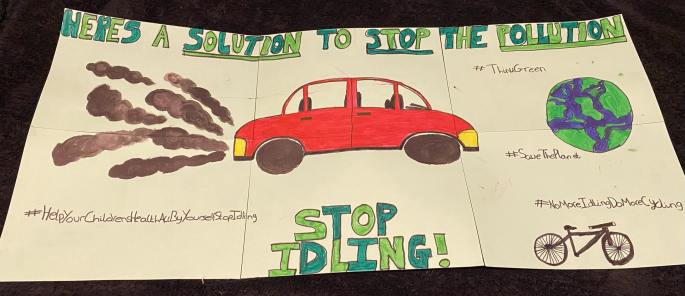
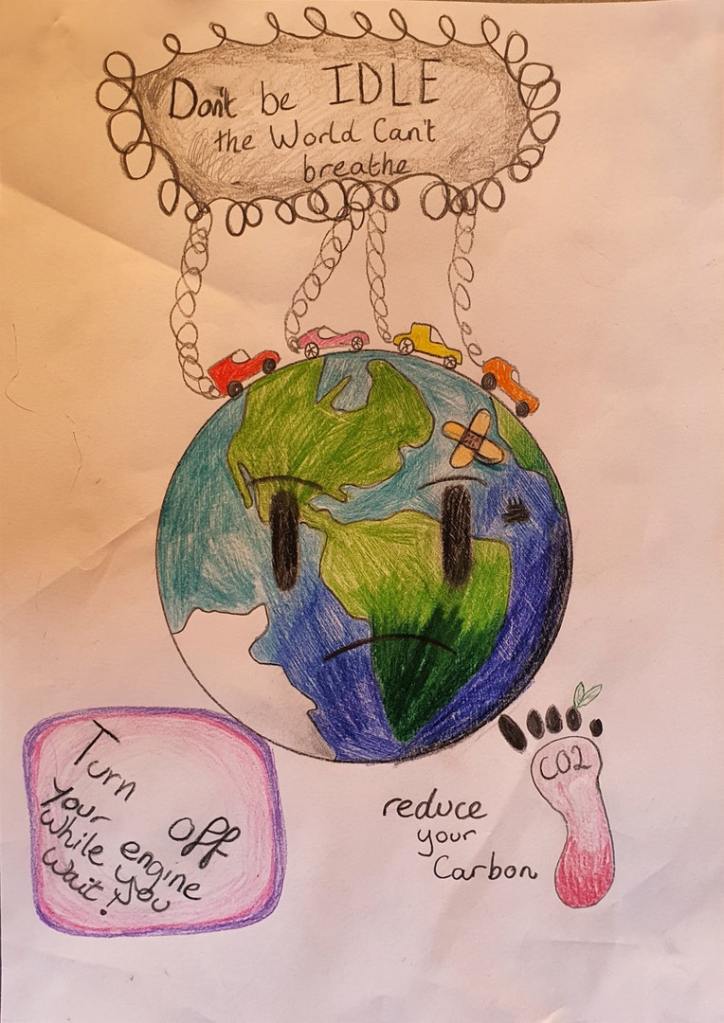
Amelia Walker from Westpark School created a fantastic, colourful poster. We especially love the bike in the bottom right corner. A large waterproof banner is in the process of being made for her.

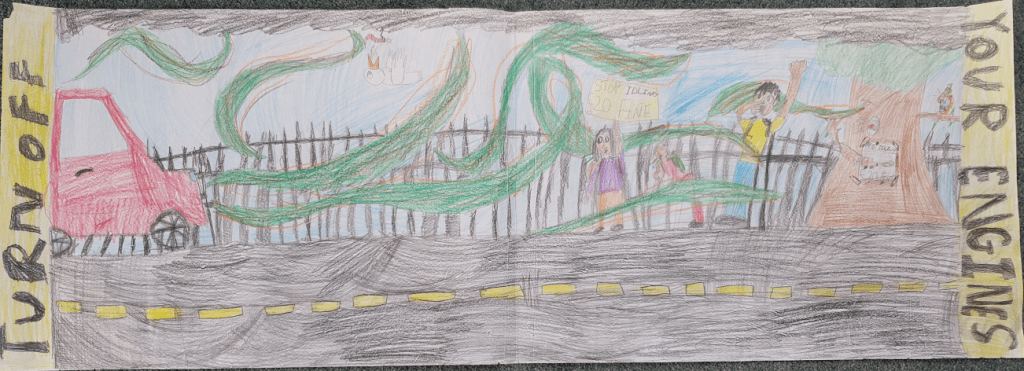
Poppy Bernard from Ferryhill Primary School. We love how Poppy has captured the flow of air pollution here to show it goes everywhere, affecting people and animals. A large banner has been created and given to Ferryhill Primary School for Poppy.

Click this link to see the designs from the other three winners.

Don't be an Idler

The winners are …

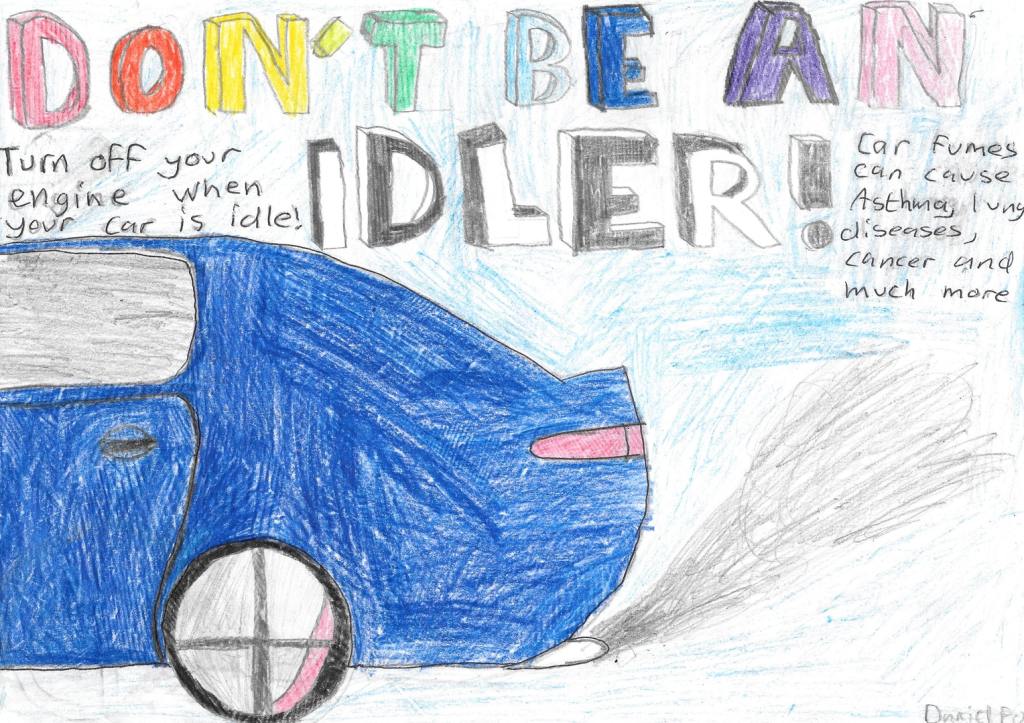
We’re very pleased to announce the winners of the Aberdeen Cycle Forum’s No Idling competition. We received over 50 entries and they were all fabulous which made the judging very difficult. Nevertheless the judges voted for their favourites and we chose three winners and printed two banners.

The judges

Gavin Thomson from Friends of the Earth
Cllr Sandra Macdonald from the Aberdeen City Council
Heather Dickson – art teacher
Elizabeth Martin age 11
Daniel Martin age 14

The Aberdeen Cycle Forum also had final say as we had to select images that would print well and were sufficient resolution for printing.

The winners

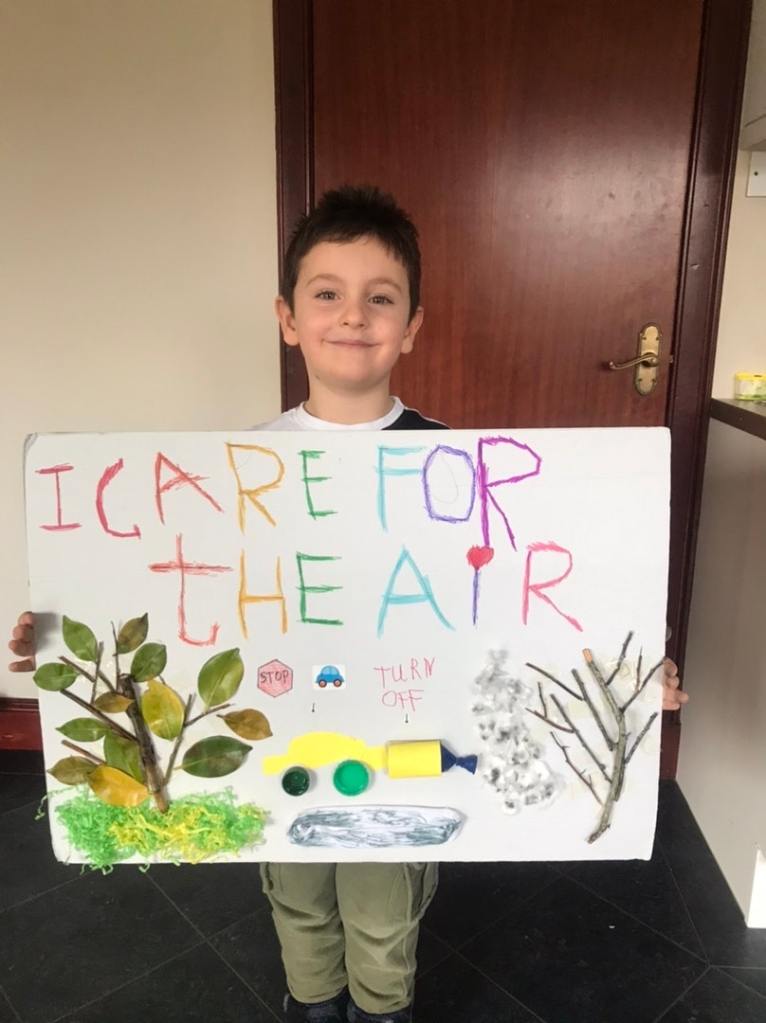
The unanimous favourite from all judges was a very resourceful design by Alexander Petrov from Cults Primary School. Alexander created a 3D poster using materials from his environment. Because we were unable to print this one onto a banner we awarded Alexander a £20 gift voucher at Alpine Bikes, an Aberdeen Cycle Forum snood, and a certificate. Great job Alex!

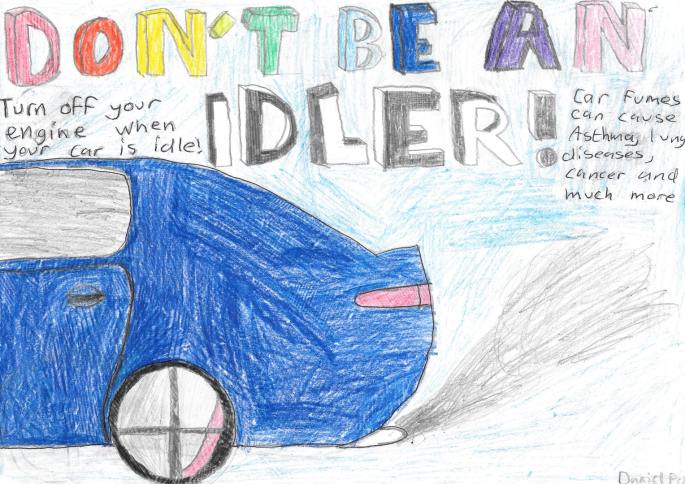
The second winner was Ellis Routledge from Milne’s High School in Elgin. Our young judges in particular liked this image. Ellis has received a large waterproof banner with his design on it.

And coming in third was this design by Daniel Fox from Cults Primary School. Daniel has also received a large waterproof banner with his design printed on it.

Thank you to everyone who entered. We enjoyed seeing all the terrific designs and hope the students enjoyed making them.

Don’t be an idler! competition

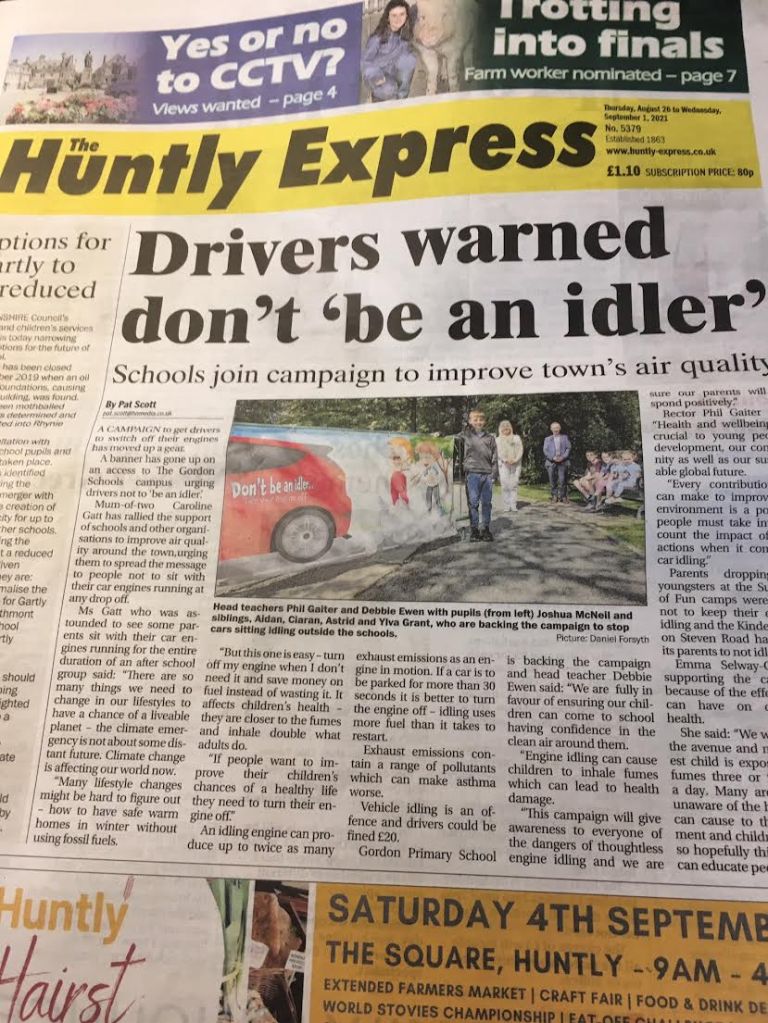
The Aberdeen Cycle Forum has launched a “Don’t be an idler!” competition for school pupils in the north east of Scotland. We want students to design a banner encouraging their parents and caregivers to turn their car engines off when the car is stationary.

It’s an offence in Scotland to leave your car engine running but more importantly, it’s harmful to our children’s health. Children are particularly vulnerable to exhaust emissions because they absorb more pollutants per pound of body weight than adults do.

Here’s what car fumes do to children. They can cause asthma and allergies, damage the growth of their lungs, raise the risk of heart disease and cancer, damage the development of their brains, and even pass into the bloodstream of unborn babies.

We want students to design a banner for their school gate, church, drama hall, etc, that convinces adults to turn their engines off and help keep the air clean for growing bodies. The winner will receive a large outdoor banner with their design featured which they can then hang proudly wherever car engines gather.

Let’s keep our children healthy and safe. Please turn off your car engines while you wait.

Image of children inhaling car exhaust fumes.