Spotlight on a cyclist: Laurie Rominger

  1. What is your name, where are you from and how long have you been in Aberdeen (if not local)?

Hello! I’m Laurie, and Aberdeen has been my home since 2016. I’m originally from a rural area outside of a small town in the US. To say it was a car dependent place would be an understatement. We didn’t even consider it possible to go out the front door for a jog. We didn’t have public buses. The private car was our interface necessary for living life.

  1. How did you get into cycling?

Going to university was my first time cycling in a city, and I was immediately hooked. My university was covered in safe streets, effective traffic calming measures, pedestrian areas, bike paths, and green spaces.

Leaving campus, things got a bit less cycle-friendly. Actually, it’s still a running joke between my friends about the time we were once away from campus and I realised a bike lane ended and I screamed “WHERE’S THE BIKE LANE GONE?!”

American university campuses are a work of perfection. I once overheard a uni student telling her friend how happy she was walking and using the bus, but that she was away to buy a car because she would need it when she had a job. We get four years living in a beautiful place, being active, bumping into friends in our shared (walkable and accessible) outdoor spaces, then the rest of your life in a car.

  1. What kind of cycling do you do?

Aberdeen is the perfect size for cycling. I can get to a lot of places in 5 minutes, and anywhere else in 15, so that’s most of the cycling I do. I find so much joy in the simple act of cycling somewhere I need to go. I’ve never found excitement in opening my car door and sitting down to drive. So I consider myself pretty lucky to get to live in a city where I can quickly get anywhere on a bike.

  1. What type of cycle do you use?

I used a Halfords bike (shout out to all the Apollo Virtue users out there!) for over five years. It gave me loads of new opportunities, for both work and leisure. Taking jobs in different locations, seeing all of the parks, new communities, exploring the Deeside. That bike opened up my world.

Unfortunately, nothing lasts forever, and that’s particularly  true of a cheap Halfords bike. After I got my permanent residency last year, I bought myself a present – a proper commuter bicycle. I used to walk, car share, and take the bus all the time, but since I’ve had a reliable bike, I just don’t have interest in those other things anymore. Not that they’re not great options!! I just can’t tear myself off of my bike.

  1. Where do you cycle usually/any favourite routes? How often?

I dawdle up and down King Street several times a week. I love that it’s quite flat, super direct, and always filled with loads of people walking and cycling. And at least there’s a bike lane. #stopparkinginthebikelane

  1. What would you like to see to improve your cycling experience?

Ok, hear me out. Bus/cycle lanes help keep traffic away from cyclists. Presumably, the highest volume of car traffic happens at peak hours, so in non-peak hours the need for cars to have two lanes of travel in one direction is not significant. It doesn’t seem to me like there are many advantages of giving drivers two lanes in off-peak hours. If we had a city-wide ban on cars in bus lanes 24/7, we could potentially make cyclists safer. 

It’s a small, easy fix, but at a deeper level, it would be nice if we could question the default that cars get as much space as we can possibly afford to them.

  1. Any top tips for someone considering cycling in the area?

Cycle with a friend! Find someone with a bike and cycle to the supermarket together. Cycle to Duthie park together and race each other down the slides. Cycle to the beach then jump in the water. (Ok, I might pass on that last one!)

That’s what I wish I could have had when I first started cycling in Aberdeen. There are lots of friendly cyclists here, but when you’re surrounded by cars, it can feel quite lonely out there. 

By the way, if you don’t already have friends keen to cycle with you, you can come find some new ones at Aberdeen’s critical mass bike ride on the last Friday of the month!


Don’t be an idler! competition

The Aberdeen Cycle Forum has launched a “Don’t be an idler!” competition for school pupils in the north east of Scotland. We want students to design a banner encouraging their parents and caregivers to turn their car engines off when the car is stationary.

It’s an offence in Scotland to leave your car engine running but more importantly, it’s harmful to our children’s health. Children are particularly vulnerable to exhaust emissions because they absorb more pollutants per pound of body weight than adults do.

Here’s what car fumes do to children. They can cause asthma and allergies, damage the growth of their lungs, raise the risk of heart disease and cancer, damage the development of their brains, and even pass into the bloodstream of unborn babies.

We want students to design a banner for their school gate, church, drama hall, etc, that convinces adults to turn their engines off and help keep the air clean for growing bodies. The winner will receive a large outdoor banner with their design featured which they can then hang proudly wherever car engines gather.

Let’s keep our children healthy and safe. Please turn off your car engines while you wait.

Image of children inhaling car exhaust fumes.

A vision for Market Street

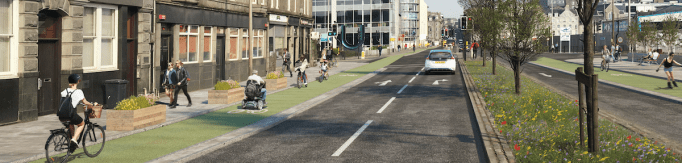
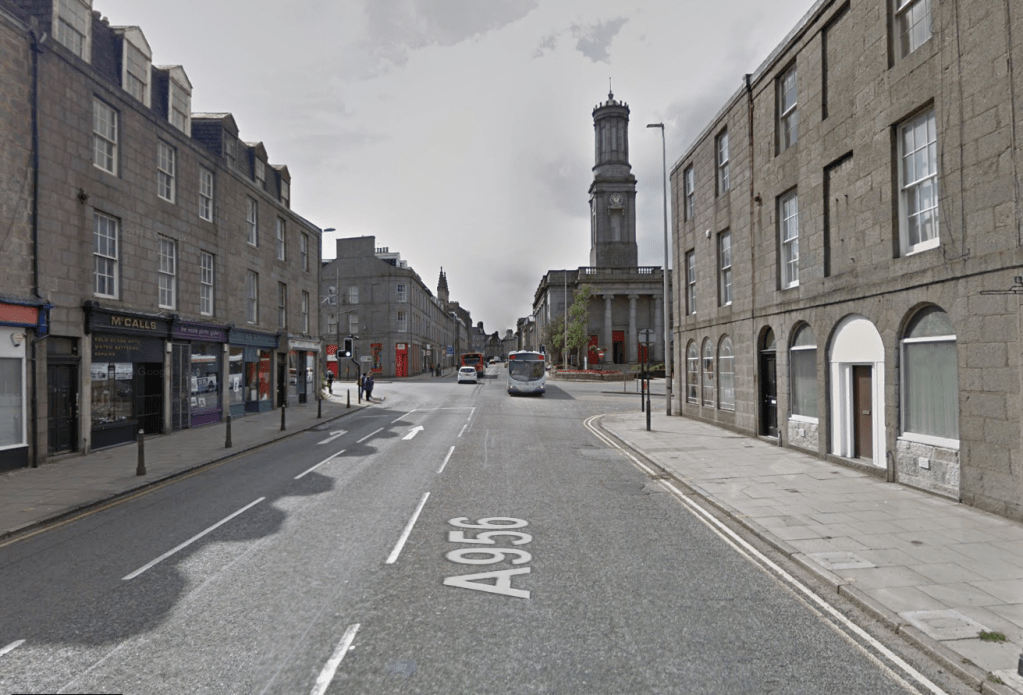
Last year the Aberdeen Cycle Forum got some funding to create two visualisations of streets in Aberdeen with a cycle path. It costs a lot of money to create these visualisations and so we wanted to choose two streets that, if they had a segregated cycle path, would have a huge and positive impact on cycling in Aberdeen.

We chose King Street for the first one and the release of that image gave the impetus for a successful campaign which sent hundreds of postcards to the city council. The city council even included our visualisation in their Sustainable Urban Mobility Plan (SUMP).

Today we are officially releasing our second visualisation which is for Market Street.

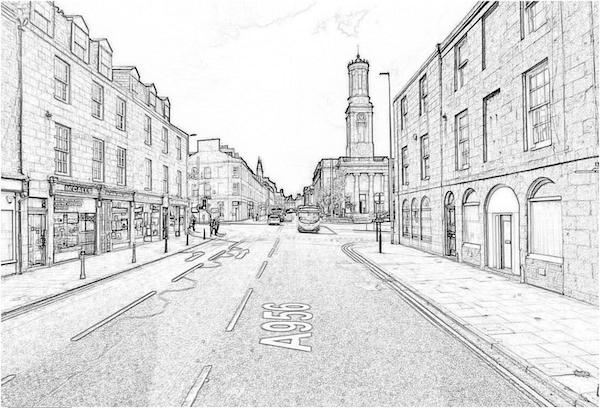
We felt Market Street was important because we repeatedly get feedback from cyclists that it’s unsafe to use. It’s a key corridor between Torry and the city centre and provides a link to the train station and Union Square. It also gets a lot of HGVs which are particularly dangerous for cyclists. For this reason a bike path on Market Street is essential if Aberdeen is to become a cycling city. The street is certainly wide enough for a bike path. In the visualisation we’ve taken one lane away from private motor vehicles and split it in half for a bike path on either side.

Bike paths on Market Street, Union Street, and King Street would provide a safe corridor for active travel from Torry all the way to the Bridge of Don – in just three streets. It could connect the train station with the University of Aberdeen, Union Square with the city centre, Torry with the Aberdeen Sports Village and so much more.

As part of our campaign for Market Street we’ve got hundreds of postcards addressed to the city council. Please grab one, sign it (add your address if you want a reply), put a stamp on it, then post it. You can pick one up from Newton Dee, Foodstory Café, or Nature’s Larder. If anyone would like to help distribute them then please get in touch with Rachel (rachelmmartin@gmail.com).

Submit your design for a bike path on King Street, Aberdeen

King Street in Aberdeen is long, reasonably flat, and connects the University of Aberdeen with the city centre. However it’s congested, polluted, and frightening to cycle along. We think it should have a segregated bike path but we recognise there are challenges to putting cycling infrastructure on existing roads – what happens at bus stops and junctions? Should the cycle path be two-way on one side of the road or one-way on each side? How much space needs to be taken from motor vehicles?

We want to know what YOU think and so we’re inviting people from the community of all ages and backgrounds to submit designs for how King Street could look with a segregated bike path. There are three vouchers from Edinburgh Bicycle Cooperative up for grabs for the winning entries which will be judged at the end of February by a panel of independent judges.

If you’d like to enter, head over to the competition site at https://kingstreet.awardsplatform.com/

The competition closes on the 15th February 2019 at 5pm UTC.

A segregated bike path on King Street will be a boon for Aberdeen because it will make the city more attractive to students and university staff, increasing student numbers in the long term and helping to attract and retain talented staff. With more people cycling it will also reduce congestion and pollution in the area and increase health and well-being. Ultimately we’d like to see a segregated path that connects the University of Aberdeen with Robert Gordon University.

The winning designs will be showcased on our website and submitted to the Aberdeen City Council. Obviously we can’t force the Aberdeen City Council to implement the designs but they will feed into the council’s SUMP (Sustainable Urban Mobility Plan).

Councillor Martin Ford accepts Designing for Cycle Traffic

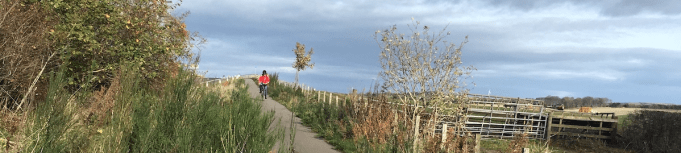
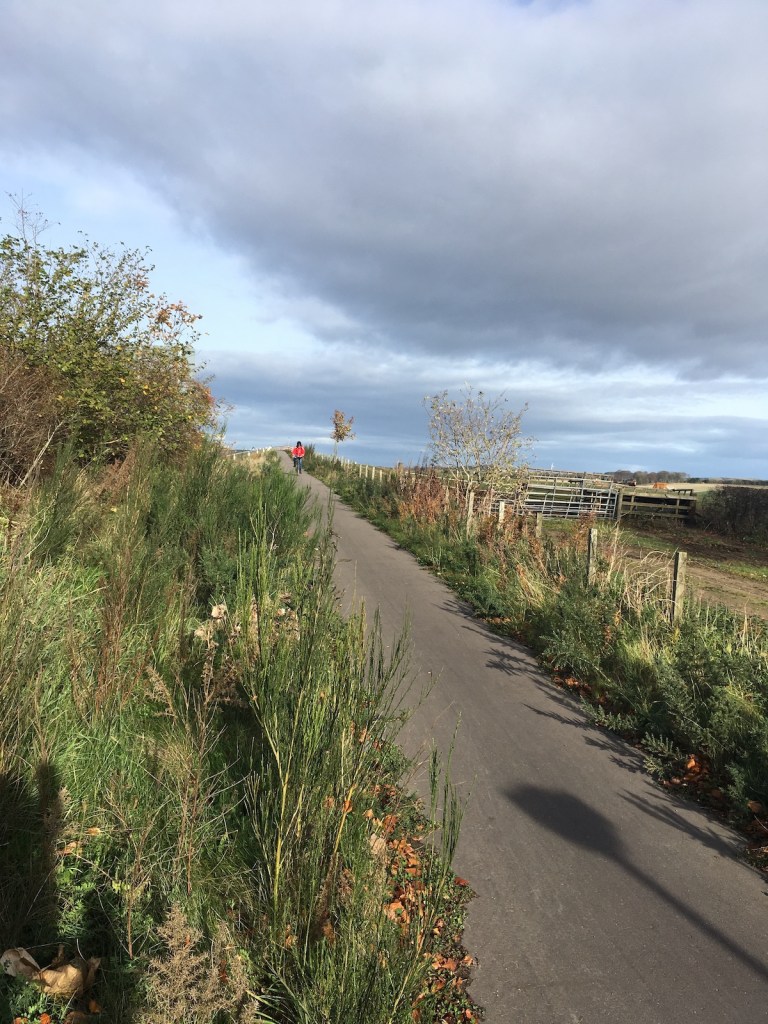
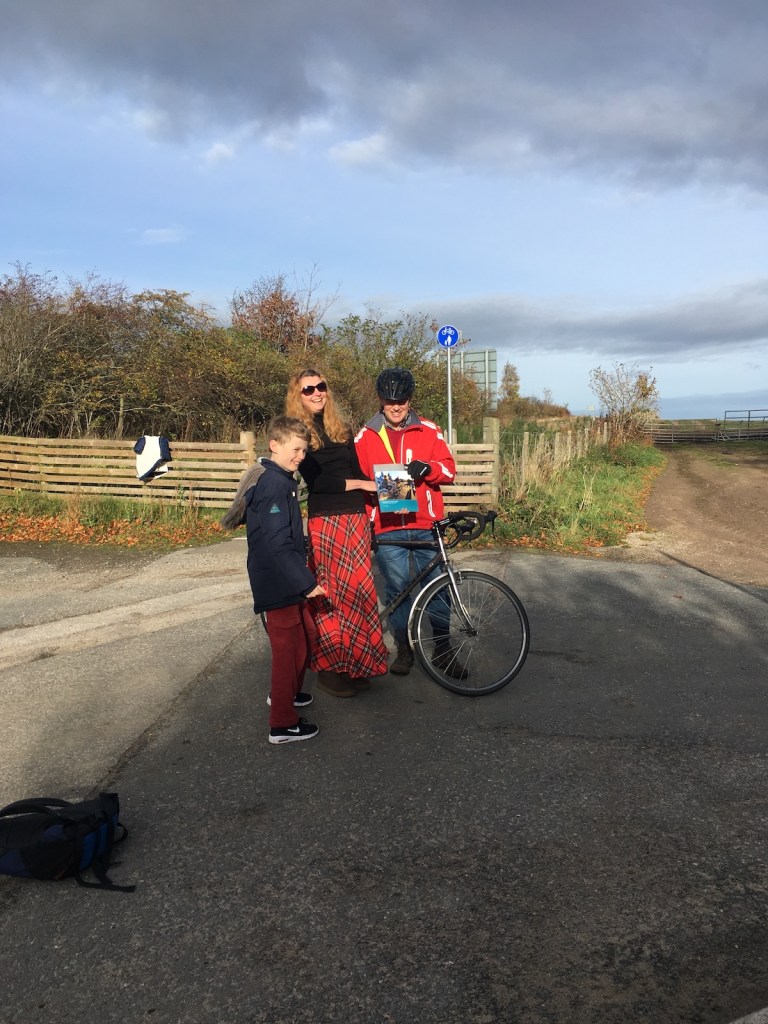
This morning we handed over one of the crowd-funded copies of Designing for Cycle Traffic to the Aberdeenshire Council. We met with Councillor Martin Ford at the start of the new cycle track at Kintore beside the A96. The new path goes all the way to Port Elphinstone and there are plans to extend it in the other direction to Blackburn.


Cllr Ford seemed pleased to accept the book and wants to increase active travel in the region through investment in the right infrastructure. We recognise that designing for cycling is challenging, especially after decades of prioritising cars, which is why we hope this book will be helpful.

We want cycling to be inclusive and something anyone can do including women, children, men, the elderly, and people with disabilities. But to reach this goal we need the right infrastructure and with the right infrastructure we can open up cycling to groups of people who otherwise wouldn’t do it.

Cycling can reduce our greenhouse gas emissions, lower pollution levels in the air we breathe, improve our mental and physical health, lower road maintenance and parking costs, reduce congestion, and if you cycle as part of your daily commute, you can eat that second piece of cake, guilt-free. What’s not to love about that?