Aberdeen Cycle Forum is pleased to announce the launch of the 2024 Aberdeen cycling awards. We’re looking for nominations to recognise improvements in conditions for cycling.
We last ran the awards in 2019 with winners announced in 2020. This year entries close at midnight on 31st July 2024 with winners announced at a special event in September.
Register and submit your nomination now at the link below.
What is your name, where are you from and how long have you been in Aberdeen (if not local)?
Hello! I’m Laurie, and Aberdeen has been my home since 2016. I’m originally from a rural area outside of a small town in the US. To say it was a car dependent place would be an understatement. We didn’t even consider it possible to go out the front door for a jog. We didn’t have public buses. The private car was our interface necessary for living life.
How did you get into cycling?
Going to university was my first time cycling in a city, and I was immediately hooked. My university was covered in safe streets, effective traffic calming measures, pedestrian areas, bike paths, and green spaces.
Leaving campus, things got a bit less cycle-friendly. Actually, it’s still a running joke between my friends about the time we were once away from campus and I realised a bike lane ended and I screamed “WHERE’S THE BIKE LANE GONE?!”
American university campuses are a work of perfection. I once overheard a uni student telling her friend how happy she was walking and using the bus, but that she was away to buy a car because she would need it when she had a job. We get four years living in a beautiful place, being active, bumping into friends in our shared (walkable and accessible) outdoor spaces, then the rest of your life in a car.
What kind of cycling do you do?
Aberdeen is the perfect size for cycling. I can get to a lot of places in 5 minutes, and anywhere else in 15, so that’s most of the cycling I do. I find so much joy in the simple act of cycling somewhere I need to go. I’ve never found excitement in opening my car door and sitting down to drive. So I consider myself pretty lucky to get to live in a city where I can quickly get anywhere on a bike.
What type of cycle do you use?
I used a Halfords bike (shout out to all the Apollo Virtue users out there!) for over five years. It gave me loads of new opportunities, for both work and leisure. Taking jobs in different locations, seeing all of the parks, new communities, exploring the Deeside. That bike opened up my world.
Unfortunately, nothing lasts forever, and that’s particularly true of a cheap Halfords bike. After I got my permanent residency last year, I bought myself a present – a proper commuter bicycle. I used to walk, car share, and take the bus all the time, but since I’ve had a reliable bike, I just don’t have interest in those other things anymore. Not that they’re not great options!! I just can’t tear myself off of my bike.
Where do you cycle usually/any favourite routes? How often?
I dawdle up and down King Street several times a week. I love that it’s quite flat, super direct, and always filled with loads of people walking and cycling. And at least there’s a bike lane. #stopparkinginthebikelane
What would you like to see to improve your cycling experience?
Ok, hear me out. Bus/cycle lanes help keep traffic away from cyclists. Presumably, the highest volume of car traffic happens at peak hours, so in non-peak hours the need for cars to have two lanes of travel in one direction is not significant. It doesn’t seem to me like there are many advantages of giving drivers two lanes in off-peak hours. If we had a city-wide ban on cars in bus lanes 24/7, we could potentially make cyclists safer.
It’s a small, easy fix, but at a deeper level, it would be nice if we could question the default that cars get as much space as we can possibly afford to them.
Any top tips for someone considering cycling in the area?
Cycle with a friend! Find someone with a bike and cycle to the supermarket together. Cycle to Duthie park together and race each other down the slides. Cycle to the beach then jump in the water. (Ok, I might pass on that last one!)
That’s what I wish I could have had when I first started cycling in Aberdeen. There are lots of friendly cyclists here, but when you’re surrounded by cars, it can feel quite lonely out there.
By the way, if you don’t already have friends keen to cycle with you, you can come find some new ones at Aberdeen’s critical mass bike ride on the last Friday of the month!
What is your name, where are you from and how long have you been in Aberdeen (if not local)?
My name is Fiona, I grew up in Scarborough in North Yorkshire which was a great place to cycle. Small enough to get around easily on a bike and with lovely countryside. I’ve been in Aberdeen for nearly 17 years now.
How did you get into cycling?
My Dad was very enthusiastic about early mountain biking and took us on some adventurous family holidays exploring off-road routes across Scotland. I loved the fact that my bike gave me independence for getting about and I was already cycling regularly as a teenager although not to school as I lived so close it was easier to walk. When I left to go to Nottingham University I used my bike a lot and was introduced to busy city centre cycling by a good friend who had grown up in inner London and had absolutely no fear of the 3 lane traffic jams!
What kind of cycling do you do?
Most of my cycling is short trips, my work commute, going to local shops and accompanying my daughters to activities. I also occasionally enjoy mountain biking, longer road trips and family cycle trips.
What type of cycle do you use?
I have a hybrid bike which I use almost every day. I’ve also got a road bike and an old Stuntjumper full suspension mountain bike which I still treasure as I rode it when I competed in the Transalp multi-stage mountain bike race many years ago which was an amazing experience.
Where do you cycle usually/any favourite routes? How often?
My work commute to Aberdeen Royal Infirmary is my regular route – only about 20 minutes passing through some busier and quieter streets of the west end. We’re lucky to live close to the Deeside line which I’ve really appreciated for family cycle rides as my girls have grown up. In the summer of 2020 my girls and I cycled back from Ballater to our house over 2 days which was a great little adventure. I also enjoy cycling through Hazlehead and up to Countesswells Woods.
What would you like to see to improve your cycling experience?
I’ve been cycling for a long time so I’m quite happy navigating Aberdeen streets but it’s not so appealing for new cyclists or younger riders. I’d like to see safe cycle routes that everyone can use to connect the city centre to the suburbs so that many more people can leave their car at home for short journeys and enjoy cycling around the town. I’d like to feel that I can encourage my daughters to cycle into town but at present Union Street and surrounding streets are really not well designed for safe cycling.
Any top tips for someone considering cycling in the area?
Try out the Deeside line if you live in the west end. It can be busy at times and you need to be careful around dogs and children but you will soon reach the leafier suburbs and get some lovely views along Deeside. Look for quieter streets when you’re planning your route and ask friends who cycle for their tips on how best to get from A to B.
The Tour of Britain will be coming to Aberdeen this Sunday. We are glad to see bigger events being allowed to happen again, and for the Tour to highlight the beauty of the North East of Scotland. We are sure the general public will share this feeling and a lot of our members will also be out and about to have a peek at the race.
In fact, there is no denying that plenty of Aberdeen Cycle Forum members see and enjoy cycling as a sport only; but many others see, or would like to see, cycling promoted as an everyday activity and a valid mode of transport. We believe that cycling should be accessible to everyone and not just to elite athletes.
The beach esplanade recently got a new layer of tarmac as part of the preparations for the Tour and the lack of potholes will benefit all road users. However, much more work is required elsewhere in the city for Aberdeen to become a place where cycling is for everyone; the focus should be on high-quality, permanent cycling-specific infrastructure.
The little infrastructure we currently have would also be much better utilised if it were designed properly. To address this latter point and identify existing infrastructure barriers to cycling, earlier this summer we launched the ‘Make Aberdeen Accessible’ campaign. We’ve had lots of submissions (see the map below), which we are going to report to the relevant parties while suggesting how they could be addressed. There are still a few days left to submit more entries, with the deadline for the campaign set for Monday 13 September.
Both the lack of robust cycling infrastructure and the poor design of existing cycling infrastructure could be addressed thanks to the recently announced Scottish Government plans to dedicate 10% of the total transport budget to active travel (walking, wheeling and cycling) by 2024-25, up from the current 3.5% share.
If you have experienced issues with barriers to active travel such as locked gates, chicanes, bollards and missing dropped kerbs, please let us know by submitting entries at this link. Or if you’d prefer to email us then you can get in touch at info@aberdeencycleforum.org.uk.
In a recent survey by Aberdeen City Council, related to their draft Active Travel Plan, 83% of respondents answering the question as to whether it was a ‘cycle friendly’ city, gave the answer that it was either ‘unfriendly’ or ‘very unfriendly’.
No one is less surprised than us.
Despite years (actually decades!) of campaigning for active travel, we still see very few positive changes, and at the same time the Council continues to bring forward new road-building schemes which will increase traffic capacity on key routes coming into the city centre.
When we respond and question the logic of this, it feels like we are dismissed because we are ‘only’ cycle campaigners and not transport or planning experts. So what can we do about that?
Last week we held an on-line seminar to try and raise the level of debate. The speaker was Professor Phil Goodwin, an eminent academic in topics such as traffic modelling , road space allocation and active travel. Professor Goodwin doesn’t know Aberdeen so wasn’t directly speaking about new Aberdeen road schemes like the Berryden corridor or South College Street, but he has lots of examples of what has and hasn’t worked elsewhere. The one-hour seminar was recorded and you can watch it below or read a short note of some of the main points (scroll down this page to see the notes).
As to the main question of whether these new road schemes will do what the Council say they will, and actually reduce traffic in the city centre? Well, Professor Goodwin couldn’t answer that because he freely admits he doesn’t know Aberdeen nor has he seen the Council’s modelling data. But if you watch the seminar, it’s pretty clear what he thinks based on his experience elsewhere.
Notes from Urban Traffic Problems webinar by Professor Phil Goodwin (28/1/21)
Hosted by Aberdeen Cycle Forum.
History:
– 1989: Road for prosperity, the ‘biggest road programme since the Romans’, was abandoned within five years as even twice the number of roads would not keep up with traffic forecasts, as demand management was required (rather than increased offer AKA more roads).
– Recurrent traffic forecasts problem: over-estimation of long-term traffic growth, under-estimation of induced traffic derived from new road projects. Road projects are often fine at first but are back to the same problem soon after, as traffic grows to fill the available space, so-called “induced demand”.
– 1990s: UK looks at German and Dutch realities/examples for town centre pedestrianisation and traffic calming in residential areas, respectively.
(Minute 7:00) Both realities aimed at better distributed road space allocation. Research and case studies (200 urban areas around the world) show that reducing road capacity leads to traffic reduction too (particularly effective in pedestrianisation schemes). But the results are not consistent. Instead, in some places there has been an increase in traffic in towns where pedestrianisation schemes and by-passes were implemented. Induced traffic from bypasses was greater than reduced traffic in city centre. This happens particularly when pedestrianisation isn’t ambitious enough and is limited to a few key shopping streets.
(Minute 11:20) Changing dynamics – The total amount of traffic is increasing, but this growth is led by Age 60+ group, while younger groups recorded car use reductions. Reduction is greater in urban areas (including small towns).
Low confidence on how trends evolve even before Covid and Brexit; even harder to understand now.
(Minute 13:40) UK Treasury recently released a review of the “Green Book” (finance manual), which assesses value for money of projects. The Review criticises how at present BCR (benefit-cost ratio) are boosted to promote new projects, whereas money would be better spent on strategic coherence and risk management (i.e. to improve what’s there). Even with this critique, ongoing projects have not been reviewed to re-calculate their actual value. Pandemic and Brexit is a good time to pause/reset and re-appraise.
(Minute 16:40) Questions for Aberdeen based on this:
– Have proposed schemes been reviewed to take account of carbon calculations, given climate emergency?
– Are effects of Covid/Brexit being considered?
– Financial and budget constraints, what schemes are really worth being implemented?
(Minute 18:08) Following Scottish Gov targets, traffic should be reduced by 20% compared to current rates, not expanded to future growth forecasts. In other words, we are already 20% above what will be allowed by future targets.
There are cities elsewhere, similar in size to Aberdeen, that have managed traffic much better (e.g. Freiburg in Germany); there is ‘experience’/case studies to take inspiration from, perhaps there is a need to look at these case studies, working trips to go and see what and how it has been done.
Q&A
(Minute 25:20) Transport planning skills within Council and elsewhere-> There is a disconnect between priorities and resources. Huge teams of qualified and expert people dedicating their work for, say, roundabouts; only a handful dedicated to active travel (walking and cycling provision) and perhaps not as expert, leading to poorer quality projects. A reallocation of road space is required; but for this to happen, a reallocation of skills and resources is also required, otherwise the so-called priorities (e.g. Transport Hierarchy) are a sham.
(Minute 27:10) Q: Local Strategies are being developed in line with Scottish Gov direction; When is a good time to go on and write a transport strategy? Connectivity is hugely important for Aberdeen.
A: Connectivity is important to any city; there tends to be an over-estimation of how better connectivity will lead to better economy, particularly if the cause it’s elsewhere. From experience, road building has served the richer areas more than the poorer nearby the project implemented (hence no levelling-up happens). Need to focus less on carbon-intense projects; Best time for developing a transport strategy is 20 years ago, second best time is now (Covid/Brexit a good time to reset), can’t be waiting/’thinking’ about writing new strategies for much longer, it needs to be done instead.
(Minute 33:47) Q: Aberdeen has narrow roads, what can be done about this?
A: Freiburg, Ghent and Seville brought about change via good buy-in from residents (even in terms of designs) and strong political support. Places with narrow roads have been some of the places where it’s been easiest to implement radical changes/policies. If too narrow, it’s best to not have mixed traffic, instead prefer street closure (for car/through traffic) and implement placemaking features.
(Minute 36:40) Q/Statement: A lot is happening in the UK (e.g. Greater Manchester) on taking the experience from other European cities, some changes also in Scotland, but it is true a lot more has to happen in Aberdeen.
A: It is not always the leading cities that remain leaders. There is an opportunity for Aberdeen to get recognition if good changes start to happen.
Q: What proportion of budget should be allocated to active travel?
A: 15% (as suggested in the question) is a good amount to start with. The main point is that allocation of funds is currently not matching the stated priorities (e.g., road hierarchy, environment), hence stated priorities are not being implemented.
Q: Villages nearby Aberdeen (eg Kingswells – Weshill) . Some of these places are less than 4 miles away, yet no quality active travel infrastructure. What needs done to get this sorted?
Best approach by Switzerland where there’s lots of small places well connected with bigger towns/cities (via multi-modal connections). Enforcement is also very important, often lacking.
Q: Are ring-roads effective in reducing traffic in the area within them?
A: Yes, if far enough from the inside central area AND traffic calming/pedestrianisation has been widely implemented within the central area. Both need to happen around the same time.
Sometimes it feels like there’s a lot of anti-cycling sentiment in Aberdeen. Cyclists are our husbands and wives, our children and parents, our brothers and sisters, which makes the prejudice all the more distressing and frightening, especially when it fuels aggression from motorists.
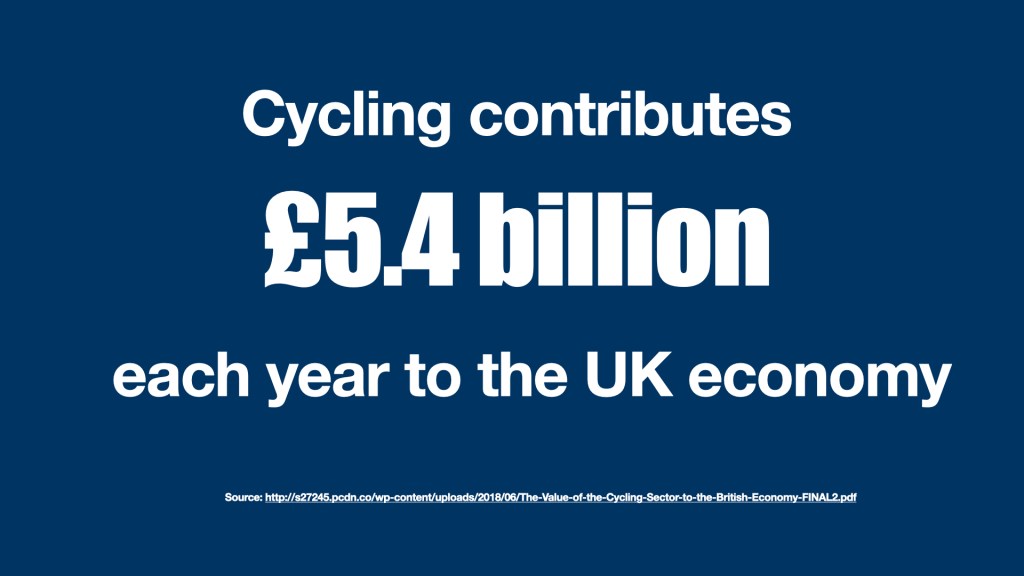
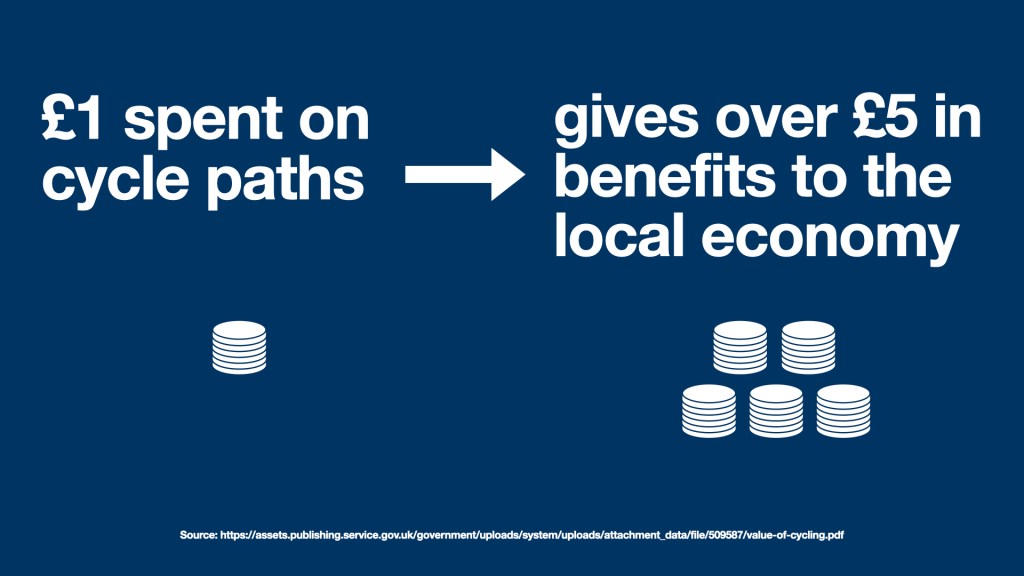
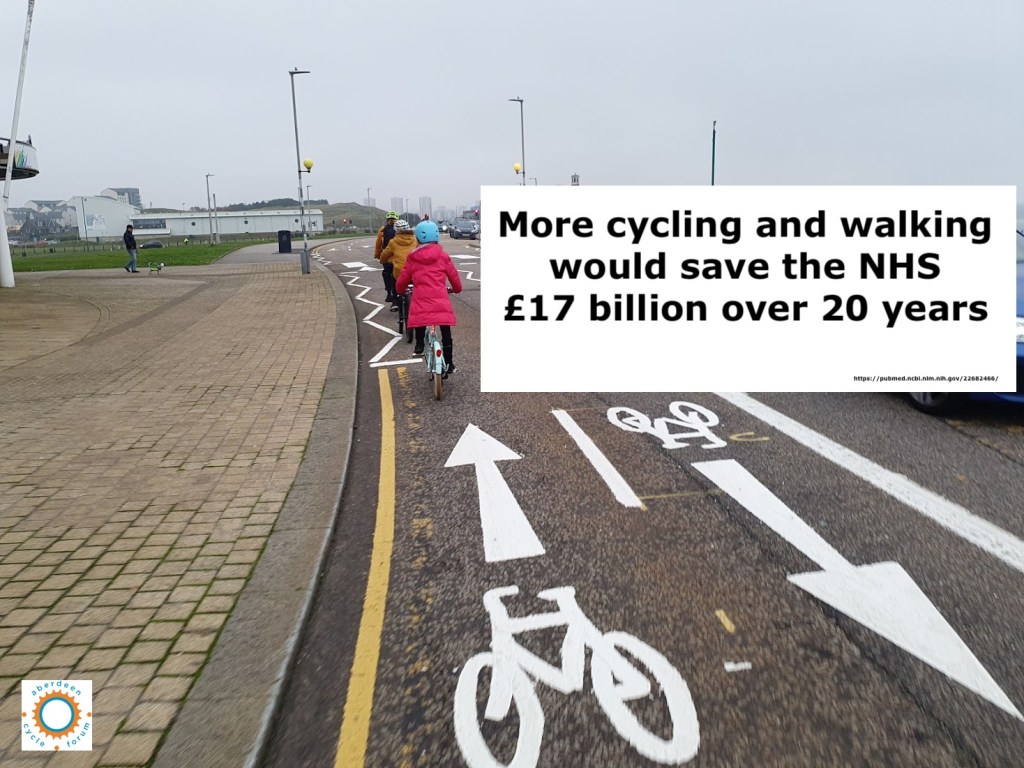
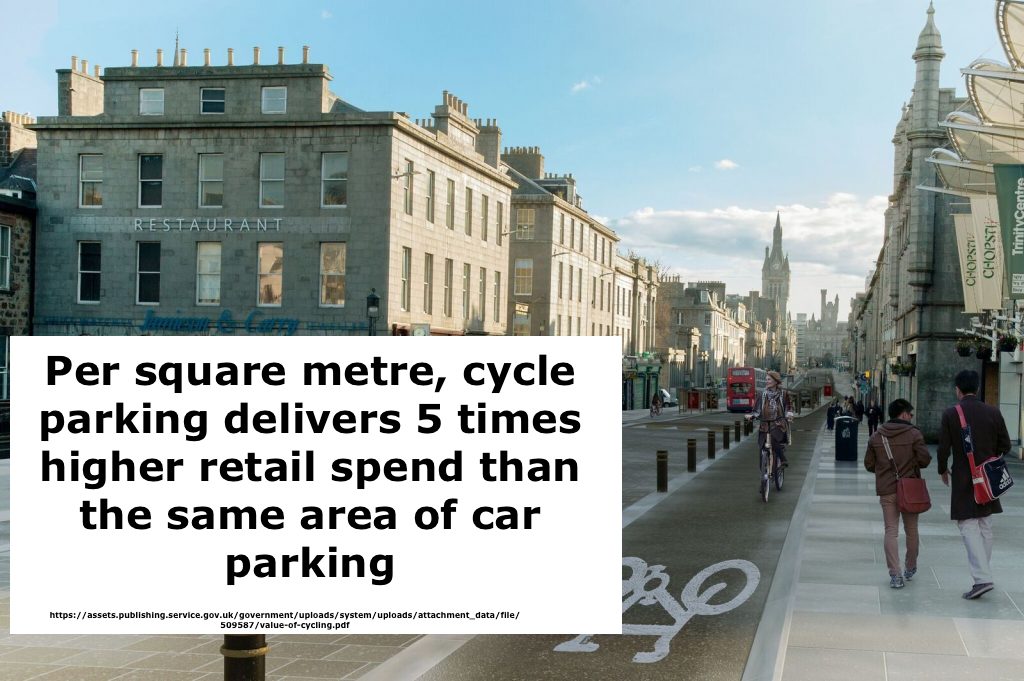
With this in mind the Aberdeen Cycle Forum has started a social media campaign to change attitudes towards cyclists. We want to focus on the benefits of cycling not just for the cyclist but for the whole community. Here are some of our messages:
You may see these messages in your social media feed and we encourage you to like and share them. You’re also welcome to download and use them yourself and if you have any suggestions for more like this then please get in touch.
We have written a joint letter along with Grampian Cycle Partnership and Scottish Cycling North East Grampian to Aberdeen City Council in a plea to reverse the decision to remove the segregated cycle path on the beach esplanade.
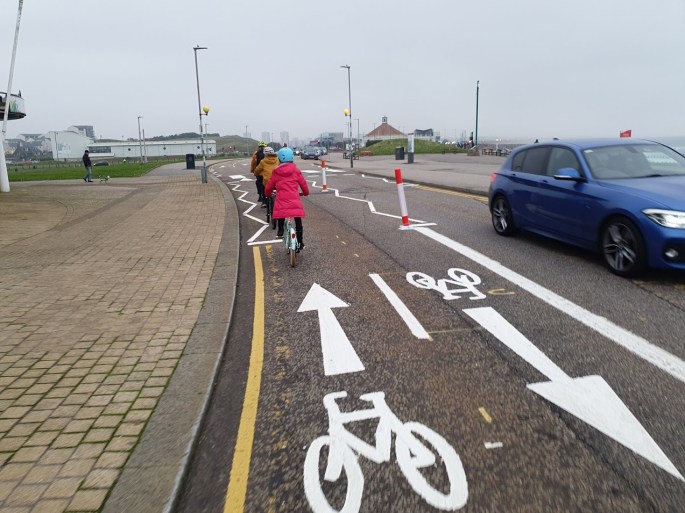
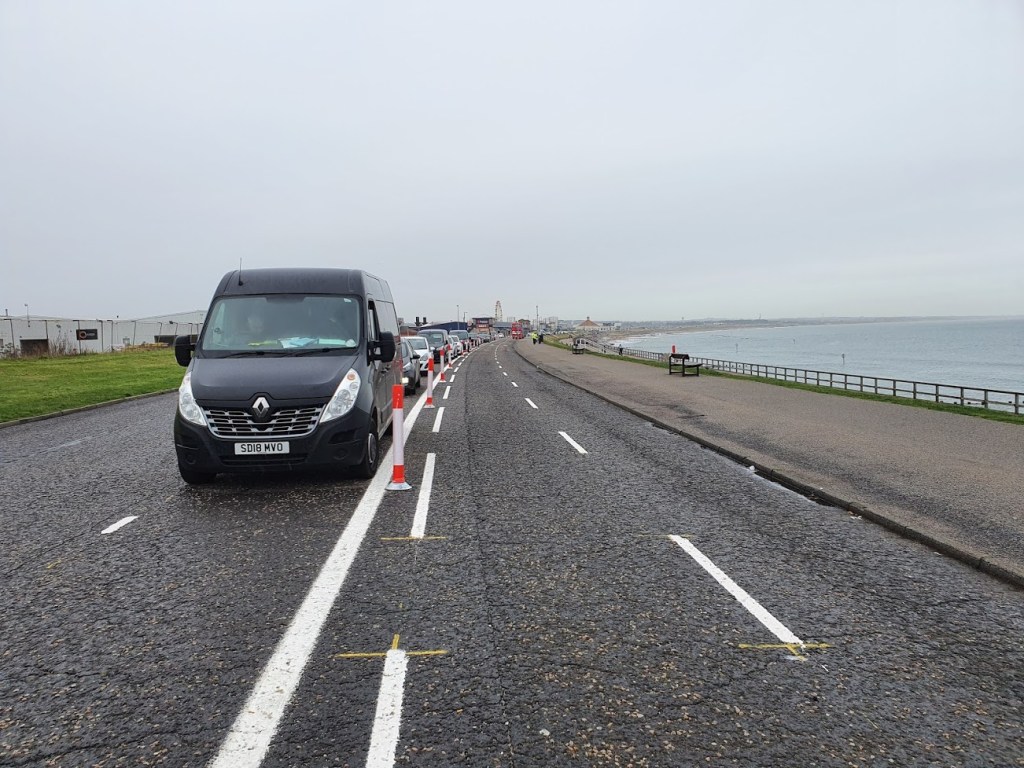
The new cycle path is a first of its kind for Aberdeen, creating a safe space for cycling that is physically separated from the carriageway. The path was installed with funding from the Scottish Government’s Spaces for People programme, which aims to help people safely distance from one another whilst they walk, wheel or cycle.
We are still in the middle of a pandemic where social distancing is as vital as ever. The paths at the beach will facilitate this not just at the beach but across the city by taking the pressure off other modes of transport such as buses.
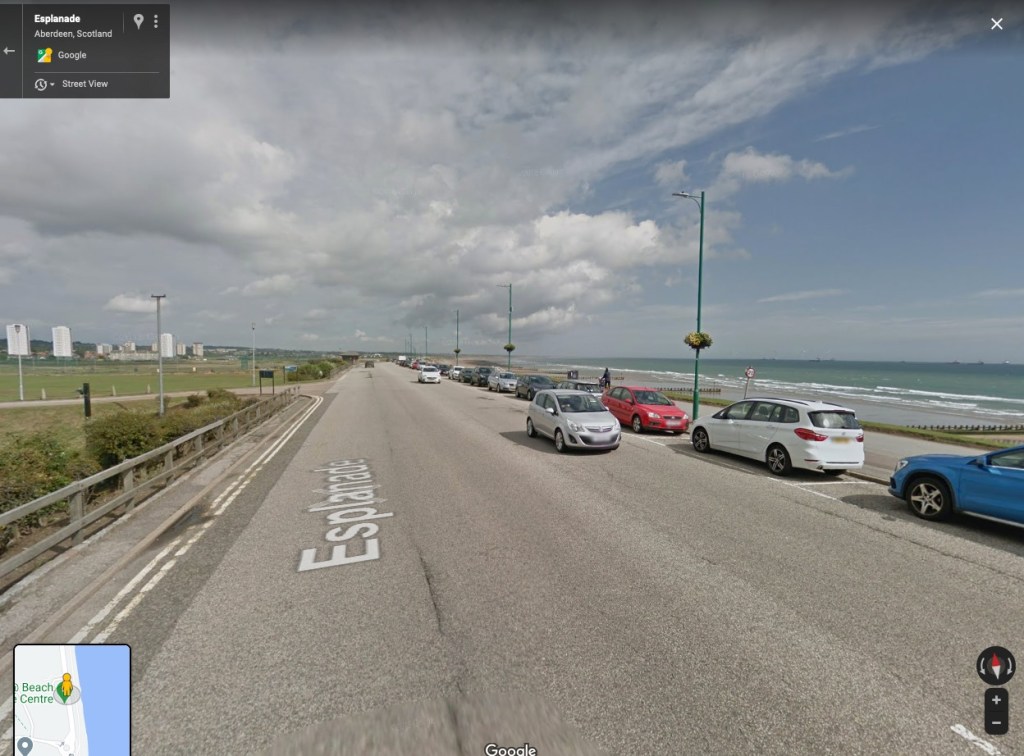
The road is sufficiently wide to accommodate the cycle path without removing any parking spaces. It has also resolved a long-standing issue with speeding as the narrower carriageway has slowed the speed of traffic. It’s a win-win for everyone.
One of the reasons given for the removal of the paths is the difficulty motorists are having unloading their cars. The council could address this issue with simple changes such as increasing the width of the buffer zone between the cycle path and the car parking. We’re keen to work with the council to improve the design and make the scheme work for all.
Another reason given for the removal of the path is supposedly poor usage. However the council’s own papers show that cycling has increased significantly in the area, including by children, and people getting more active. It’s still early days for this path and we believe even more people will use it if it’s embraced and well promoted.
The wider issue is the lack of a coherent city-wide network. It is still difficult to get from the city centre (or anywhere) to the beach by bicycle. But as the number of segregated paths grows, more cyclists will use them. The beach esplanade route is an excellent foundation for a wider network which makes it all the more tragic to see it taken away.
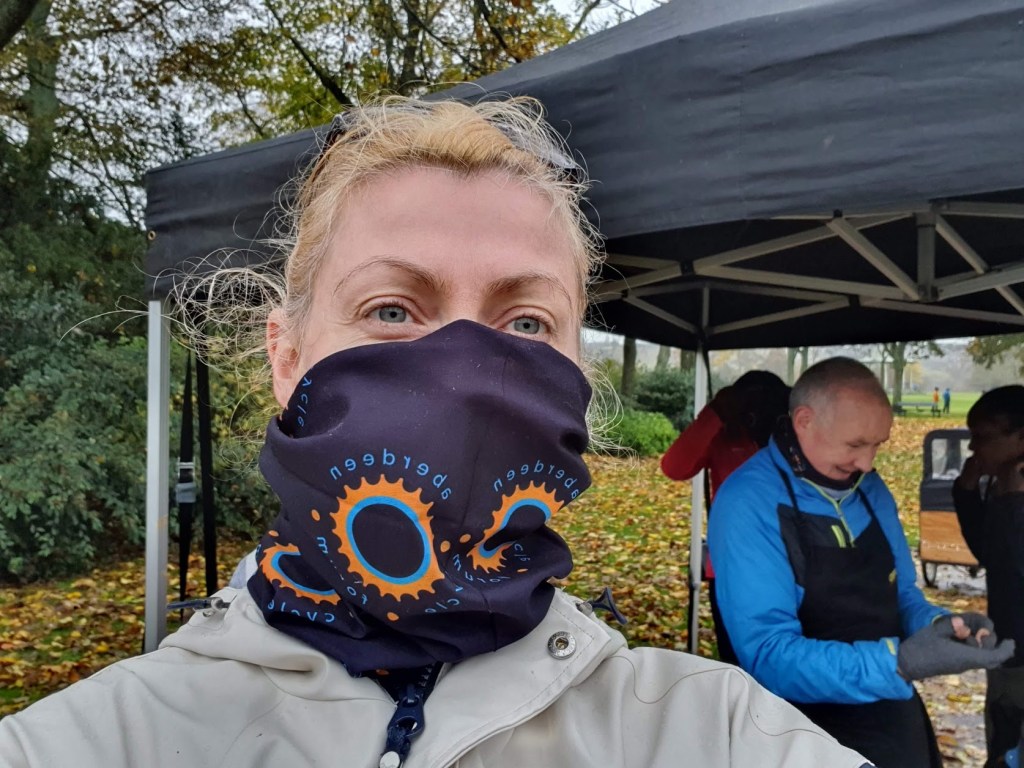
We’re doing all we can to challenge the removal of the Aberdeen beach segregated cycle lanes. In normal times we’d organise a protest but with the current restrictions mass gatherings are banned and with good reason. Instead we’re going to encourage people to use the cycle lanes tomorrow from 12 – 2pm. We’re going to be there and will have a dozen or so Aberdeen Cycle Forum-branded snoods to give away. We can toss one to you from two metres away!
If you haven’t written to the council about the cycle paths yet then we encourage you to do so. You can find contact details here.
Now more than ever we need to redistribute road space to active travel. Cars take up an amount of space that’s disproportionate to the number of people they can move which is in many cases just one or two people per car.
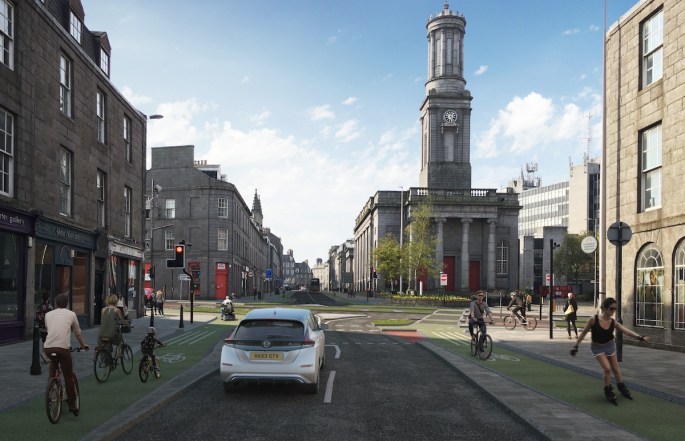
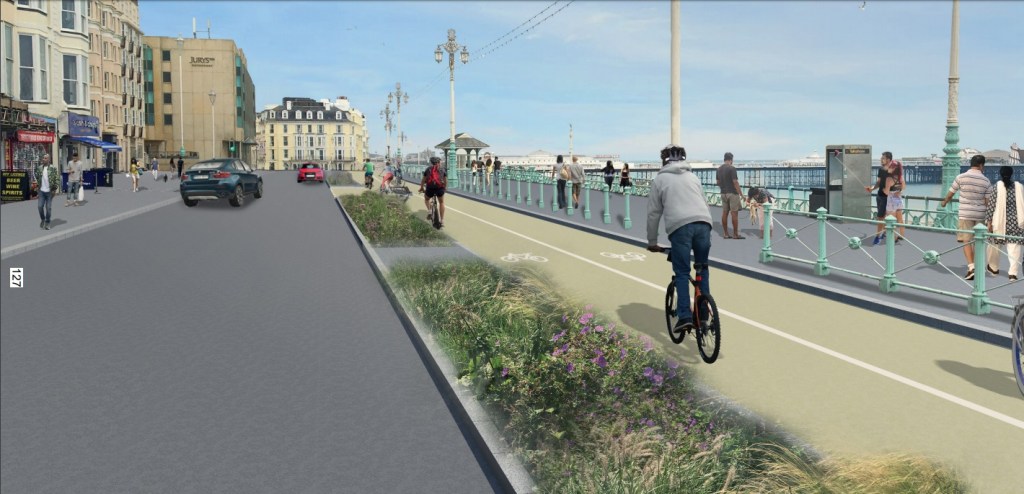
We know the segregated bike lane was made with ugly orange bollards but they were temporary. The lanes could be made permanent into something like this:
The Aberdeen Cycle Forum is dismayed to see the city council is planning to remove the cycle lanes at the beach. The segregated cycle path was installed less than two months ago using money from the Sustrans Spaces of People fund as a way to allow for social distancing during this pandemic.
The beach path was the very first of its kind in the city and provided hope for cyclists that this would be the start of a connected network of paths. Aberdeen city currently accommodates cyclists poorly and the environment on the roads can feel hostile and dangerous. This presents a barrier to people and discourages them from cycling.
You don’t have to be a cyclist yourself to benefit from cycling infrastructure. People who replace trips by car with trips be bike lower the carbon footprint of the community, reduce expenses for the NHS, and lower air pollution in the city. This benefits the entire community.
If you’re as disappointed as we are by the council’s decision then please write to your local councillor. You can find emails at the links below:
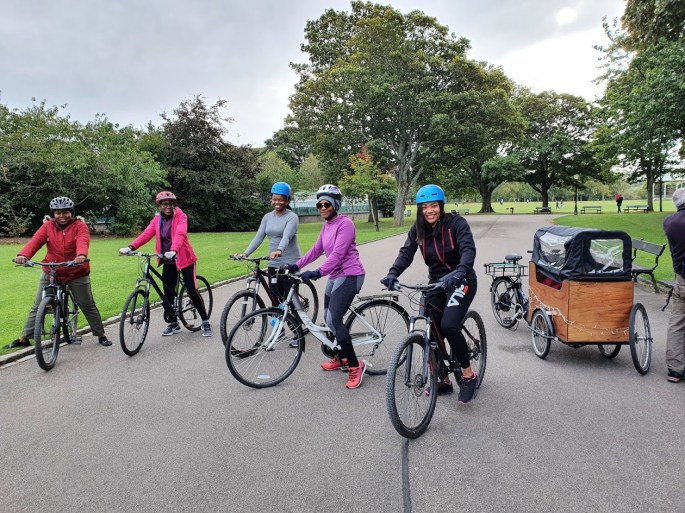
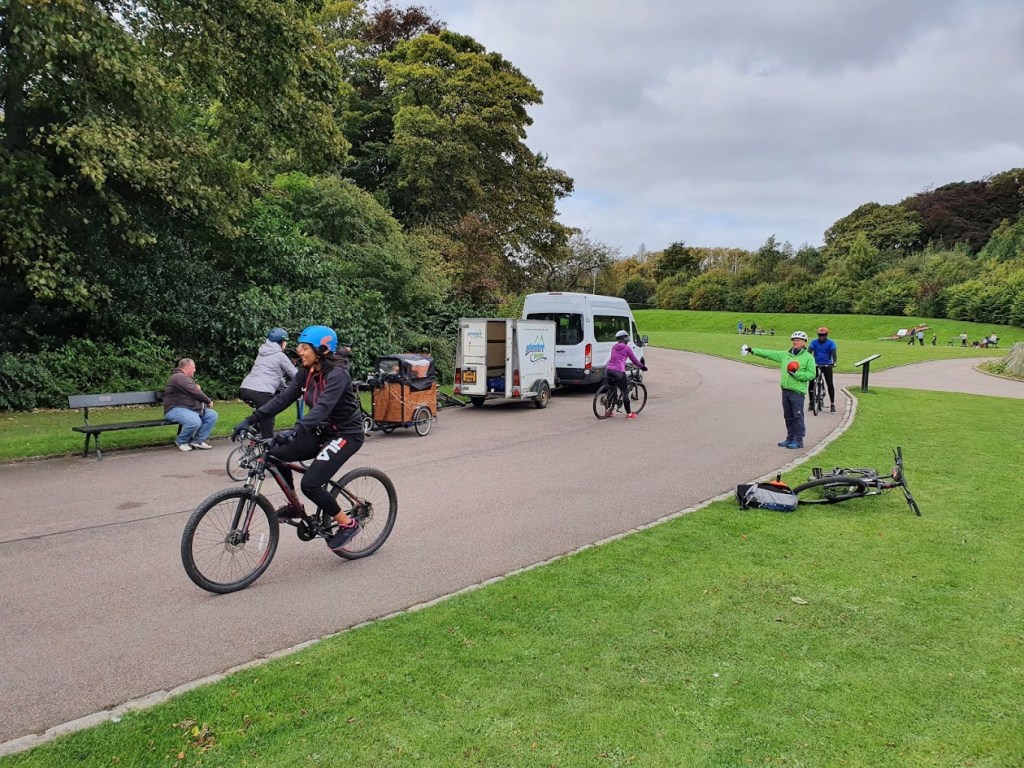
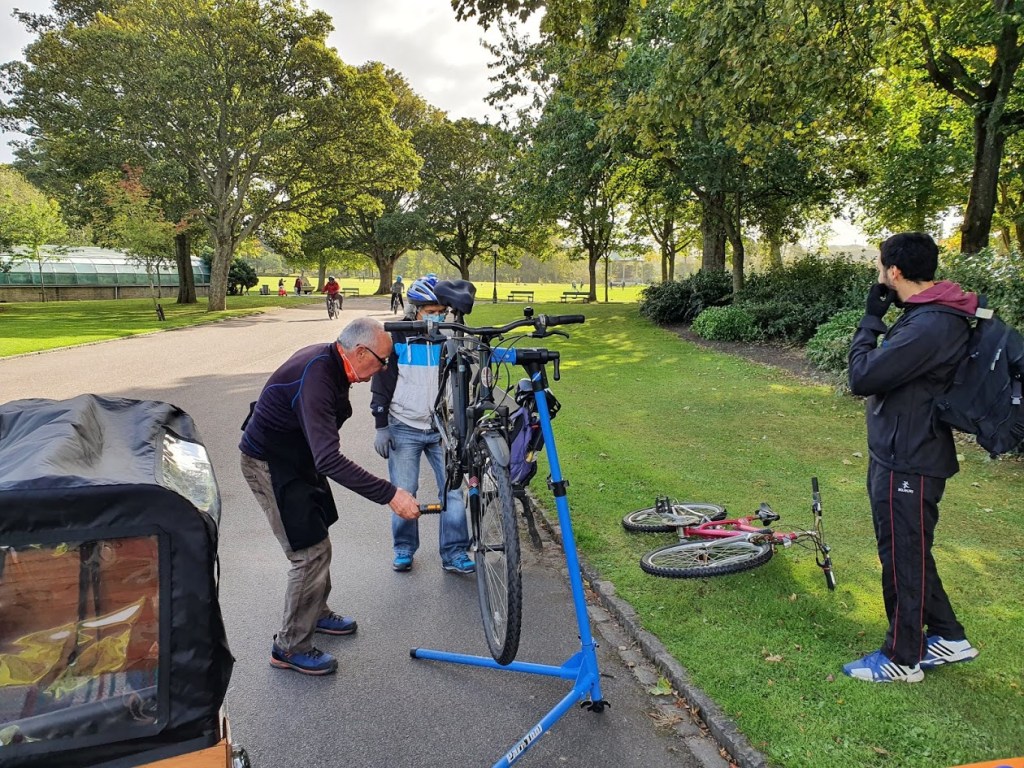
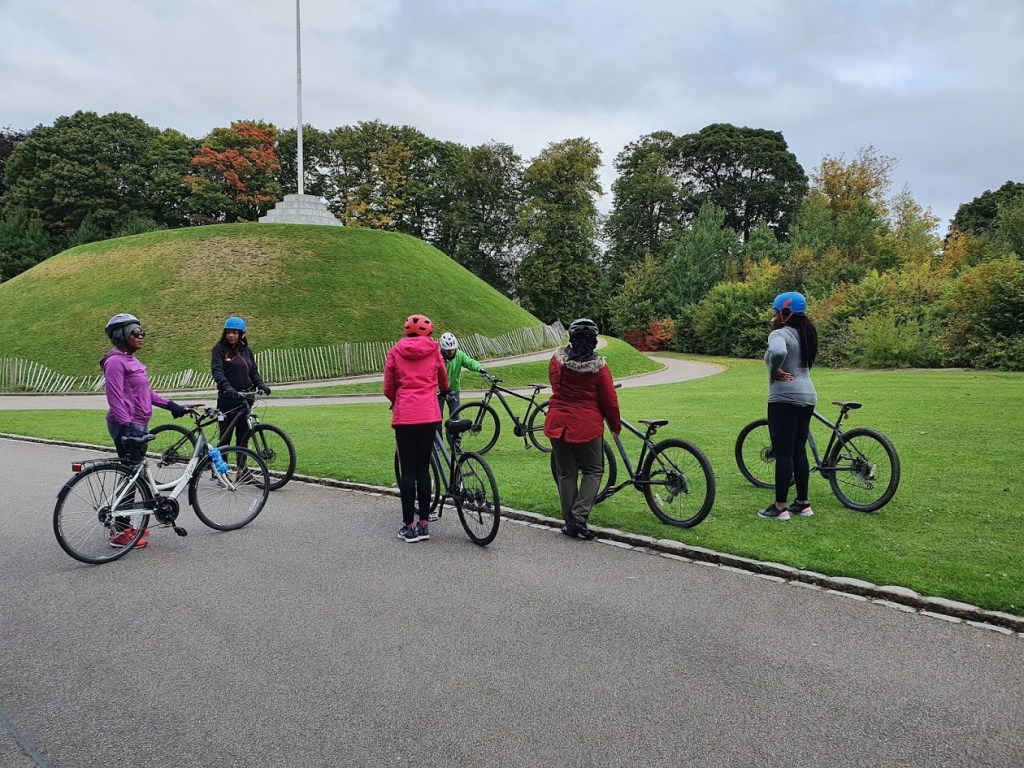
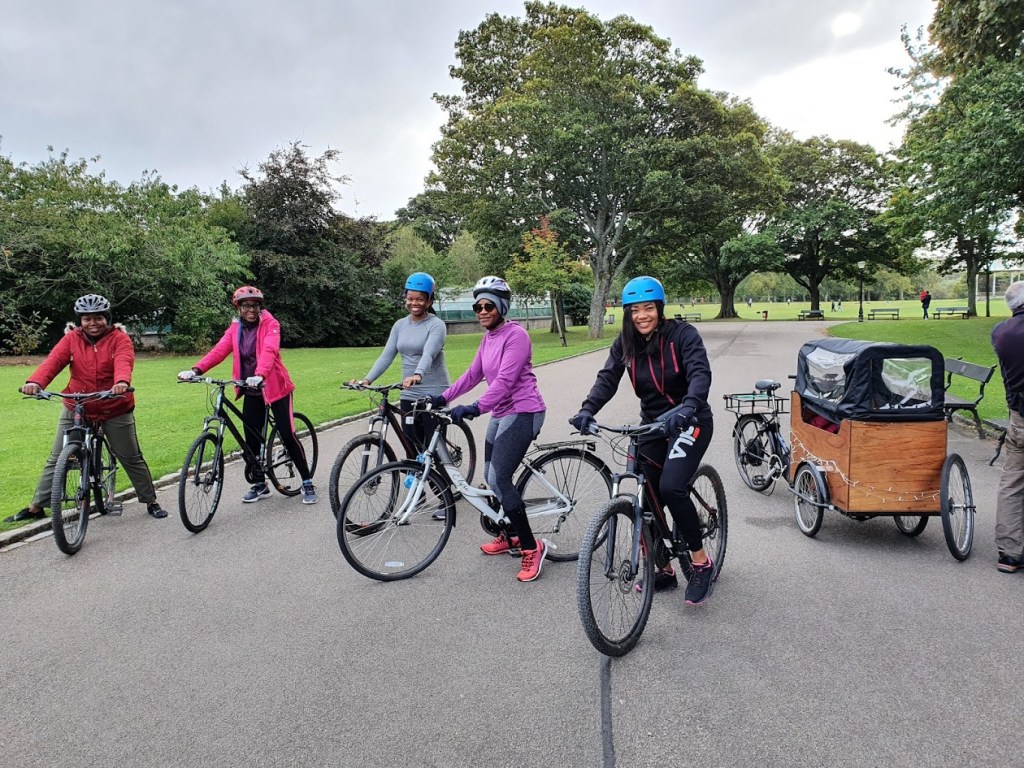
The Aberdeen Cycle Forum has been organising cycling lessons for adults. We started in August and have put on 6 lessons and Dr Bikes so far. They’ve been a terrific success and we’ve had an overwhelming response from people wanting more so your wish is our command and we have booked in two more dates for lessons in October. Lessons are capped at four people each so please reserve your spot at the links below. We will have a Dr Bike at both events . The instructors and Dr Bike are provided by Adventure Aberdeen.






 Aberdeen Cycle Forum